---
title: "Predictive Dialer for Insurance Renewals in India | DialShree"
url: "https://www.elisiontec.com/predictive-dialers-for-insurance-companies/"
date: "2026-07-06T17:27:43+05:30"
modified: "2026-07-10T19:58:40+05:30"
author:
name: "Bhagyashree"
categories:
- "Call Center Solution"
tags:
- "dialshree"
word_count: 3269
reading_time: "17 min read"
summary: "A predictive dialer for insurance is outbound calling software that automatically dials multiple policyholder numbers per agent, filters out unanswered calls, busy tones, and voicemail, and connect..."
description: "Discover how predictive dialers optimize insurance companies' agent productivity, improve policy renewals, streamline collections, and customer engagement."
keywords: "Predictive Dialer,insurance companies, dialshree, Call Center Solution"
language: "en"
schema_type: "Article"
related_posts:
- title: "Cloud vs On-Premise Contact Centers: Here’s the Complete Guide for You!"
url: "https://www.elisiontec.com/cloud-vs-on-premise-contact-centers-heres-the-complete-guide-for-you/"
---
# Predictive Dialer for Insurance Renewals in India | DialShree
_Published: July 6, 2026_
_Author: Bhagyashree_
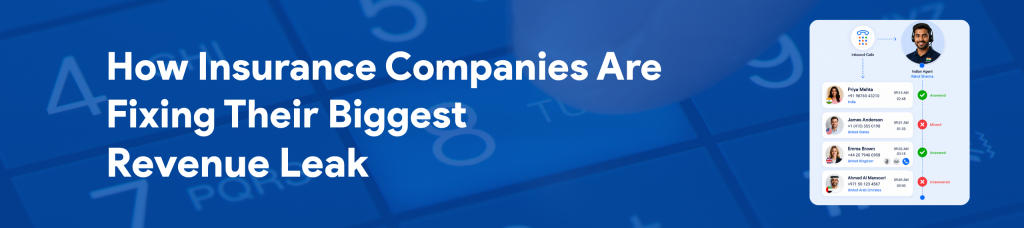
**A predictive dialer for insurance is outbound calling software that automatically dials multiple policyholder numbers per agent, filters out unanswered calls, busy tones, and voicemail, and connects agents only to live conversations — turning a renewal or collections team’s calling capacity into 4–6x more policyholder contact per shift.** For insurers running renewal, collections, or lapsed-policy campaigns across thousands of accounts, that difference is the gap between a portfolio that retains its book and one that quietly bleeds premium every cycle.
Every renewal season, insurance companies face the same uncomfortable truth: the policies that lapse are not lost because customers chose to leave. **They lapse because nobody reached them at the right moment.**
The due date was in the system. The premium was calculated. The customer history was in the CRM. Everything needed to save that policy existed — and it still slipped through. Not because of poor products or wrong pricing, but because manual outreach cannot move fast enough through a portfolio that spikes three or four times over a sixty-day renewal window and then normalises again.
This is not a people problem. It is a capacity problem — and unlike pricing or product design, it is one insurers can fix inside a single quarter.
## The Scale Reality Facing Indian Insurers
India’s insurance penetration currently stands at 3.7% of GDP — less than half the global average of 7%. IRDAI’s Vision 2047 targets universal insurance coverage, and private insurers are aggressively scaling retail portfolios across life, health, motor, and term categories to close that gap. That growth is exactly what is straining renewal and collections desks built for a smaller book of business.
India’s leading insurers — HDFC Life, Mahindra Insurance Brokers Limited (MIBL), ICICI Prudential, SBI Life, and Star Health — are already running automated outbound infrastructure for their renewal and collections teams. The mid-market is making the same shift now, largely because the technology that was once enterprise-only is now accessible to a 50-seat renewal desk, not just a 500-seat one.
Tier-2 and Tier-3 expansion adds another layer of pressure: policyholder bases are growing fastest in exactly the geographies where a single renewal desk now has to cover more regional languages and more spread-out due dates than a metro-only book of business ever required. Manual calling capacity does not scale with that kind of growth — it simply falls further behind each renewal cycle.
Market RealityPortfolio size has outgrown manual calling capacity across the industry — and the insurers still calling manually are the ones losing renewal share to competitors who automated first.
## What Manual Calling Actually Costs
A renewal agent working manually reaches 15 to 20 live policyholders per day. The rest of the shift disappears into unanswered rings, busy tones, disconnected numbers, voicemail, and manual CRM logging after every attempt. Actual talk time — the only part of the job that produces revenue — drops to 10 to 15 minutes per hour. For a broader breakdown of how dialer technology addresses this across industries, see our [complete guide to call centre dialers](https://www.elisiontec.com/complete-guide-to-call-center-dialer/).
Break down a typical 8-hour manual shift and the arithmetic is stark:
- **Dialing and ring time:** roughly 3–4 minutes lost per attempted call, multiplied across 60–80 dial attempts
- **No-answer and voicemail handling:** consumes the majority of agent hours with zero policyholder contact
- **Post-call CRM logging:** 2–3 minutes per call, manually re-typing what a dialer would capture automatically
- **Idle time between calls:** agents deciding who to call next instead of a system queuing the next best contact
During a 60-day renewal season managing 50,000 policies, that capacity gap translates directly into:
- Policies that cross their due date without a single outreach attempt
- Lapse rates that compound across mid-ticket and high-ticket portfolios
- Collections teams chasing arrears that a timely reminder call would have prevented
- Renewal managers with no real-time visibility — only end-of-day reports that are already 24 hours old
The Real CostEvery lapsed policy is a customer acquisition cost spent once and a renewal revenue line that disappears permanently — and in health and life categories, a lapsed customer often has to re-underwrite from scratch to return, which most never do.
## Predictive vs. Progressive vs. Preview Dialing: Which Mode Fits Which Insurance Workflow
Most articles comparing dialer types treat them as generic sales tools. Insurance operations are different: renewal, collections, lapsed re-engagement, and upsell each demand a different balance of speed and context. Choosing the wrong mode for the wrong campaign is one of the most common — and most avoidable — mistakes insurers make when automating outreach.
| Dialing Mode | How It Works | Best Insurance Use Case |
|---|---|---|
| **Predictive** | Dials several numbers per available agent simultaneously, using pacing algorithms to predict when an agent will free up; connects only answered calls | High-volume T-30/T-15 renewal campaigns and large collections drives where speed matters more than deep context |
| **Progressive** | Dials one number at a time, but only once the agent is free and has reviewed the record — no overlap, no abandoned calls | Lapsed policy re-engagement, where the agent needs full policy history and lapse reason loaded before speaking |
| **Preview** | Surfaces full customer and policy context on screen before the agent chooses to place the call | Upsell and cross-sell conversations during renewal, where a consultative, informed opening matters more than call volume |
DialShree runs all three modes natively within a single platform, so a renewal desk is never forced to standardise on one mode and lose effectiveness in the campaigns where it doesn’t fit. A T-7 urgency campaign runs predictive. A lapsed-policy win-back list runs progressive. An upsell push during renewal season runs preview — all managed from one dashboard, on the same policy data.
## How DialShree Changes the Equation
DialShree’s outbound dialing platform does not make agents work harder. It makes the same agents dramatically more productive by eliminating every non-conversation minute from their shift.
80–120 Live conversations per agent per day 45–55 min Agent talk time per hour 60–70% Lower cost per live connect | Metric | Manual Calling | DialShree Predictive Dialer |
|---|---|---|
| Live conversations per agent per day | 15–20 | 80–120 |
| Agent talk time per hour | 10–15 minutes | 45–55 minutes |
| 50,000-policy renewal campaign | 40–50 days | 10–12 days |
| CRM logging | Manual after every call | Automatic, real-time |
| Call recording coverage | Inconsistent | 100%, searchable by policy number |
| Cost per live connect | Baseline | 60–70% lower |
The [DialShree platform](https://www.elisiontec.com/products/contact-center-solutions/) connects directly to the insurer’s CRM or policy management system, pulls due-date-based contact lists, and dials multiple numbers per agent simultaneously — routing only live-answered calls through. Agents begin every conversation with full policy context already on screen, not a blank CRM tab they have to search while the customer waits.
Real Client Outcome One of our insurance clients deployed DialShree’s predictive dialer across their renewal and collections team. Within the first campaign cycle, they achieved an **87.94% improvement in operational productivity and efficiency** — same team, same working hours, same portfolio. The difference was entirely in how their agents’ time was being used. Manual dialing, idle time, and logging delays were eliminated. Every available minute went into live policyholder conversations. The result was not incremental. It was transformational.
## Four Core Use Cases for Insurance Operations
### Policy Renewal Campaigns
DialShree segments renewal lists by due date — T-30, T-15, T-7, and T-1 — running parallel campaigns for each tier simultaneously. Agents on the T-7 list have urgency conversations while T-30 agents run warm, consultative renewals. Each segment operates with its own script, call outcome codes, and CRM sync logic. Renewal managers have live visibility on connects, conversions, callbacks scheduled, and policies renewed — without waiting for end-of-day reports.
*Signals it’s time to segment this way:* renewal conversion rates that drop sharply after T-7, agents unsure which list to prioritise on a given morning, or managers discovering lapses only after the due date has already passed.
### Lapsed Policy Re-Engagement
A lapsed policyholder is not a lost customer. They are a warm lead with existing intent who fell through an outreach gap. DialShree’s progressive dialer serves this use case specifically — loading full policy history, lapse reason, and prior interaction context on the agent screen before the call connects. Agents approach the conversation with informed empathy rather than a cold opening script. Conversion rates reflect the difference.
*Signals this needs attention:* a lapsed-policy list that only gets worked reactively, no record of why a policy lapsed in the first place, or agents opening every lapsed call with “I’m calling about your policy” instead of a specific, informed reason.
### Collections and Premium Recovery
For quarterly and monthly premium schedules, DialShree integrates with policy management systems to trigger automated IVR reminders before due dates — with a direct payment option or seamless escalation to a live agent. For overdue accounts, the predictive dialer runs structured collections campaigns with configurable escalation workflows, PTP (Promise-to-Pay) tracking, and automated follow-up scheduling — the same underlying capability set as DialShree’s [Collection Module built for NBFC and BFSI recovery operations](https://www.elisiontec.com/auto-dialer-for-nbfc-collections/).
*Signals this needs attention:* collections agents manually tracking promise-to-pay dates in spreadsheets, or overdue accounts ageing past 60 days before the first structured follow-up attempt.
### Upsell and Cross-Sell at Renewal
Renewal calls are the highest-intent product conversations in insurance. A health insurance customer renewing is a natural candidate for a top-up cover, critical illness rider, or term add-on. A motor policyholder renewing is a prime target for zero-depreciation or roadside assistance upgrades. DialShree’s preview dialer loads existing coverage, renewal history, and recommended products on screen before every call — turning a routine renewal into a consultative revenue conversation.
*Signals this needs attention:* renewal agents with no visibility into cross-sell eligibility, or upsell conversations left entirely to individual agent memory instead of system-surfaced recommendations.
## Compliance: What Regulated Outbound Insurance Calling Actually Requires
Most predictive dialer content written for insurance targets US-based agents selling policies to consumer leads — a very different regulatory environment from India, where renewal and collections calling sits inside a licensed, IRDAI-audited insurance operation. Getting this wrong is not a minor risk; it is the difference between a defensible audit trail and a compliance gap that surfaces during an inspection.
### What IRDAI-regulated outbound calling actually requires
- **Call recording and retention:** insurers need searchable, retrievable call records — not just recordings that exist somewhere, but ones an audit team can pull up by policy number within minutes
- **Do-Not-Disturb (DND) and TRAI regulations:** outbound campaigns to Indian mobile numbers must respect DND registry status and TRAI’s telemarketing regulations for commercial communication
- **Consent and opt-out logging:** every opt-out request needs to be captured and enforced across future campaigns, not just noted informally by the agent who took the call
- **Script and disclosure controls:** renewal and collections scripts should include mandated disclosures (premium terms, grace period, lapse consequences) consistently — not left to individual agent memory
- **Regional-language scripting:** disclosures and consent language often need to be available in the policyholder’s regional language without losing regulatory accuracy in translation, particularly for Tier-2/Tier-3 portfolios
- **Escalation audit trails:** collections and renewal escalations need a documented chain — who was contacted, when, what was disclosed, and what the outcome was
Compliance NoteDialShree supports IRDAI-regulated outbound insurance operations through 100% call recording, configurable script controls, opt-out and DND logging, and audit-ready records searchable by policy number. It does not replace your institution’s own IRDAI licensing or internal compliance sign-off — those remain the insurer’s responsibility. Always validate script disclosures and consent workflows with your compliance and legal teams before launch.
## What a Rollout Actually Looks Like: A 30-Day Path from Manual to Automated
The gap between “we should automate renewal calling” and an agent actually taking the first predictive-dialed call is smaller than most operations teams expect. A typical DialShree deployment for an insurance renewal or collections desk follows four stages:
1. **Week 1 — Integration and data mapping.** Connect DialShree to the policy management system or CRM via REST API. Map due-date fields, policy status, lapse history, and contact numbers so campaign lists build automatically instead of being exported manually each week.
2. **Week 2 — Campaign and script configuration.** Build T-30/T-15/T-7/T-1 renewal segments, lapsed re-engagement lists, and collections escalation tiers. Configure scripts with compliance disclosures reviewed by legal, and set outcome codes that match how the operations team already reports results.
3. **Week 3 — Pilot campaign and agent training.** Run a live pilot on one segment — typically T-7 renewals or a single collections bucket — with a subset of agents. Use this window to tune pacing (for predictive dialing) and refine scripts based on real call outcomes.
4. **Week 4 — Full rollout and dashboard handover.** Extend to the full agent team and complete campaign set. Renewal and operations managers get live dashboards for connect rates, conversions, and callback queues, replacing end-of-day spreadsheet reporting.
Insurers with more complex integrations — multiple policy systems, legacy on-premise databases, or a hybrid cloud/on-premise requirement — should plan for 4–6 weeks rather than 30 days. The pattern holds either way: integration and data mapping determine the timeline far more than the calling technology itself.
## What Renewal Conversations That Actually Convert Sound Like
The predictive dialer maximises conversations. What happens in those conversations determines revenue. Three principles that separate high-converting renewal teams from average ones:
1. **Lead with protection, not payment.** The instinct is to open with “Your premium of ₹12,000 is due on the 15th.” The better opening is: “Your health cover of ₹10 lakh renews this month — I am calling to make sure your family stays protected without any gap.” Policyholders respond to what they stand to lose, not what they owe.
2. **Treat objections as information gaps.** “I will think about it” almost always means “I do not fully understand the consequences of not renewing.” An agent who can explain waiting periods, lapse penalties, and re-entry health requirements will consistently outperform an agent trained to push on price. DialShree’s scripting tools surface this information contextually during the call.
3. **End every call with a confirmed next action.** If the policyholder does not renew on the call, the outcome is a specific callback date, time, and agent assignment — logged automatically by DialShree and queued for the right agent at the scheduled moment.
## Insurance Dialer Terms, Explained
A quick reference for terms used throughout this guide — useful for operations teams evaluating vendors and for anyone landing here from a search on a specific term.
- **Predictive dialer:** a system that dials multiple numbers per available agent simultaneously, using statistical pacing to minimise agent idle time while limiting abandoned calls.
- **Progressive dialer:** a system that dials one number at a time, only once an agent is free and has reviewed the record — no risk of an answered call with no agent available.
- **Preview dialer:** a system that shows the agent full customer context before they choose to initiate the call, prioritising informed conversation over speed.
- **PTP (Promise-to-Pay):** a collections outcome code capturing a policyholder’s commitment to pay by a specific date, tracked for automated follow-up.
- **T-30 / T-15 / T-7 / T-1:** renewal campaign segments named for days remaining before the policy due date, each typically run with a different script and urgency level.
- **Abandonment rate:** the percentage of predictive-dialed calls that connect to a customer but have no agent available — a key metric regulators and quality teams monitor closely.
## Built for Insurance Operations — Not Adapted for Them
DialShree is not a generic contact centre platform retrofitted for insurance workflows. It is an outbound communication platform with native support for the integration patterns, compliance requirements, and campaign structures that insurance operations depend on — unlike [open-source dialer stacks](https://www.elisiontec.com/how-dialshree-is-better-than-open-source-call-center-solutions/) that require significant in-house engineering to reach the same reliability.
What insurance teams get from day one:
- **Three dialing modes** — predictive for high-volume renewal campaigns, progressive for lapsed re-engagement, preview for upsell and consultative conversations
- **Bidirectional CRM and policy system integration** via REST API — real-time, automatic, no manual reconciliation
- **100% call recording** with policy-number-based search — audit-ready, supports IRDAI-regulated operations
- **Real-time renewal dashboards** — live connect rates, conversion tracking, callback queues, campaign progress
- **Configurable scripts** with structured outcome capture — every call result logged in a format your operations and analytics teams can use
- **Automated IVR reminders** with live-agent escalation for premium collection and instalment follow-up
- **DND and opt-out enforcement** across campaigns, reducing compliance exposure on outbound lists
- **Optional [AI voice analysis add-on](https://www.elisiontec.com/products/ai-voice-analysis/)** — real-time sentiment and compliance monitoring across 100% of renewal and collections calls, for insurers who want QA coverage beyond call recording alone
## The Policies You Retain This Renewal Season Are Already in Your System
The data exists. The due dates are known. The customer relationships are real. What closes the gap between a policy that renews and one that lapses is a single, well-timed conversation — and the operational infrastructure to have that conversation at scale, every cycle, without missing an account.
DialShree makes that infrastructure available to every insurer, regardless of portfolio size.
Stop losing renewals to missed outreach.Book a 30-minute walkthrough showing exactly how DialShree handles renewal campaign setup, CRM integration, and real-time reporting for your specific portfolio structure.
[Book an Insurance Demo](https://www.elisiontec.com/contact-us/)
## Sources & Regulatory References
This guide references the following primary regulatory sources. Regulations are amended periodically — always check the regulator’s own site for the current version before relying on any specific requirement for compliance purposes.
- Insurance Regulatory and Development Authority of India — [IRDAI Regulations](https://irdai.gov.in/regulations)
- Telecom Regulatory Authority of India — [Telecom Commercial Communications Customer Preference Regulations (TCCCPR), 2018](https://trai.gov.in/tcccpr)
---
## Frequently Asked Questions
How do insurance companies use auto dialers for policy renewals?
Insurance companies use auto dialers like DialShree to automate renewal reminder campaigns, connect agents with policyholders faster, and reduce manual dialing efforts. This helps teams contact more customers daily, improve follow-up consistency, and increase policy renewal rates.
What are the benefits of DialShree’s predictive dialer for insurance companies?
DialShree’s predictive dialer automatically dials multiple numbers and connects agents only to answered calls. This reduces idle time, increases agent productivity, improves customer contact rates, and helps insurance companies achieve better results from sales, renewals, and collections campaigns.
Which insurance processes can be automated with DialShree?
DialShree can support policy renewals, lead follow-ups, premium payment reminders, customer surveys, claims-related communication, cross-selling, upselling, and collections campaigns. It helps insurance teams manage large-scale outbound communication efficiently.
Can DialShree integrate with insurance CRM and policy management systems?
Yes. DialShree integrates with CRM and policy management platforms via REST API, enabling agents to access customer information, renewal dates, call history, and follow-up notes from a single interface. This reduces manual work and improves agent efficiency.
What is the difference between a predictive dialer and a progressive dialer for insurance calling?
A predictive dialer calls several numbers per available agent at once and connects only answered calls, maximising speed for high-volume renewal or collections campaigns. A progressive dialer calls one number at a time only when an agent is free, which suits lapsed-policy re-engagement where the agent needs full context before the call connects.
Is DialShree compliant with IRDAI regulations for outbound insurance calling?
DialShree supports IRDAI-regulated operations with 100% call recording, DND and opt-out logging, configurable script controls, and audit-ready records searchable by policy number. Final compliance responsibility, including IRDAI licensing and script disclosure sign-off, remains with the insurer’s own legal and compliance teams.
How long does it take to set up a predictive dialer for a renewal campaign?
A standard DialShree rollout — integration, campaign configuration, pilot, and full deployment — typically takes about 30 days. More complex integrations with legacy or on-premise policy systems can take 4–6 weeks.
Can a predictive dialer help recover lapsed insurance policies?
Yes. A progressive dialer configured for lapsed-policy re-engagement loads full policy history and lapse reason before the call connects, so agents can open with an informed, specific conversation rather than a cold script — which typically improves reinstatement conversion versus untargeted re-calling.
** 
---
_View the original post at: [https://www.elisiontec.com/predictive-dialers-for-insurance-companies/](https://www.elisiontec.com/predictive-dialers-for-insurance-companies/)_
_Served as markdown by [Third Audience](https://github.com/third-audience) v3.5.3_
_Generated: 2026-07-10 14:28:41 UTC_