

Contact Center Software for BPO Companies in India: Scale, Compliance & Cost Optimization
Contact center software for BPO companies is a platform that runs voice and digital customer conversations for many clients at once, while keeping each client's data, compliance rules, SLAs and billing separate inside one operation.
Key takeaways
- BPO contact center software has to keep each client's data, rules, SLAs and billing separate. Ask exactly where that separation is enforced.
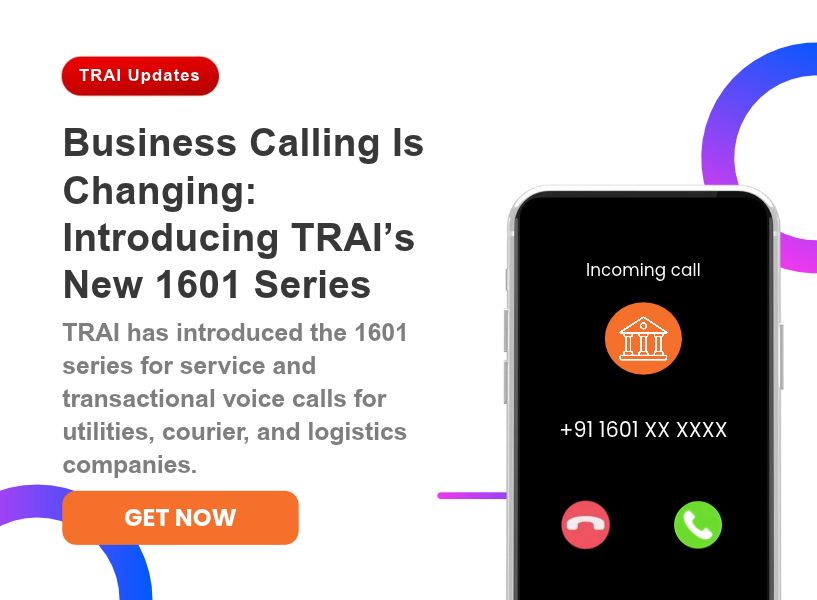
- Indian dialers now need the right number series per client: 140 for promotional calls, 1600 for BFSI and government service calls, 1601 for other eligible sectors.
- DPDP consent-manager registration opens on 13 November 2026, and core DPDP obligations apply from 13 May 2027.
- BPO margins are protected by per-client billing data and live, per-client SLA views, not by feature counts.
- Make any vendor prove client isolation, compliance controls and onboarding speed in a live demo.
Ask a BPO owner in India what keeps them up at night, and you rarely hear "we need more features." You hear things like:
"Client A just audited our recordings. Client B wants a different SLA report by Monday. Client C's campaign needs 80 more seats next week. And finance is still reconciling last month's billing."
India is the world's BPO capital. Business process management alone is a roughly $59 billion segment of the country's tech industry in FY26, according to NASSCOM's Strategic Review 2026. The scale is impressive. The operational reality is that you're not running one contact center. You're running ten, twenty or fifty of them at once, each with its own rules.
As a contact center software provider, we've had this conversation with BPO leaders for years. Our honest answer: a generic tool will get you started, but it won't get you to scale. This guide walks through what BPO-grade contact center software really needs, which Indian rules now shape your dialer, and how to evaluate any vendor, including us.
~$59BIndia BPM revenue, FY26 (NASSCOM)
140 / 1600 / 1601TRAI series: promotional / BFSI & government service calls / other sectors' service calls
13 Nov 2026DPDP consent-manager registration opens
13 May 2027Core DPDP obligations apply
What is contact center software for BPO companies?
It is the operating layer of an outsourced customer operation. It combines telephony, dialers, IVR, omnichannel messaging, call recording, quality assurance and reporting, and adds the controls a multi-client business depends on: separate campaigns, role-based access, per-client compliance settings and SLA monitoring. Regular call center software assumes one business with one rulebook. BPO software assumes many clients, each with its own data, scripts, targets and invoice, all running on the same floor.
Why is a BPO not just a big contact center?
An in-house contact center answers to one business. A BPO answers to many, and every client contract adds a layer:
- Different rules. A US healthcare client expects HIPAA-grade handling. A lending client in India expects RBI-aligned collections conduct. A UK retailer expects GDPR.
- Different commercial models. Per-minute, per-seat, per-resolution, per-lead, or a hybrid of all four.
- Different SLAs. Service level, abandon rate, AHT, QA score and FCR targets vary by client, sometimes by campaign.
- Thin margins. Profit lives in utilization, attrition, and how fast you can launch a new client.
- Constant scrutiny. Clients audit. They want evidence, not promises.
Think of it like running a food court versus a single restaurant. The kitchen basics are the same, but every stall has its own menu, hygiene rules and billing. If your software treats the whole court as one restaurant, something will break. Usually at 50 clients, not 5.
What must BPO contact center software get right? Five tests
1. Client isolation that's real, not cosmetic
Each client should feel like their own contact center inside your platform, with separate:
- Queues, IVR flows, dialer campaigns and routing
- Agent groups, supervisors and permissions
- Dispositions, scripts and CRM integrations
- Recordings and customer data that other clients (and unauthorized staff) can't see
- Reports and dashboards
Be careful with the word "multi-tenant." Some platforms use it as a label on a shared pool of data. Ask where the separation is actually enforced: at the database, application or role level.
How DialShree handles it
DialShree is built around three applications, Admin, Supervisor and Agent, so access is role-based by design. Admins configure campaigns, users and rules; supervisors monitor and coach; agents work only within their assigned campaigns. Inbound, outbound and blended campaigns all run on one platform.
2. Per-client cost and billing visibility
Many BPOs still reconcile client billing in spreadsheets. It works until it doesn't, and it tends to fail at month-end, exactly when the client is waiting for the invoice.
You need to know, per client, what each hour of work cost and what it earned:
- Usage by client, campaign and queue (minutes, calls, seats, messages)
- Support for several pricing models running in parallel
- Telephony, SMS and WhatsApp cost attribution
- Export-ready data for your finance team
How DialShree handles it
DialShree offers a wide range of reports across calls, agents and campaigns, and that data can be used to build client-wise billing.
3. Compliance that changes with the client
This is where BPO software separates from generic contact center software. One BPO may work under:
- India: the Digital Personal Data Protection (DPDP) Act, 2023 and its 2025 Rules, TRAI's commercial communication regulations (number series, DND preferences and consent), RBI conduct norms for loan recovery, and IRDAI norms for insurance clients
- US: TCPA, HIPAA, PCI DSS and state recording-consent laws
- EU/UK: GDPR and UK GDPR
The point isn't to memorize every law. It's to be able to assign the right rules to the right client, and prove it later. The next section sets out the Indian rules in detail, with dates.
How DialShree handles it
- Automated DNC/DND list management at the dialing level
- Call recording with consent handling for two-party consent environments
- Secure storage and access control for recordings and customer data
- On-premise and cloud deployment, so clients with strict data-location requirements can keep data where they need it
- Audit trails through reporting and call logs
- PCI DSS compliance, for BPOs that take or verify card payments on behalf of banking, insurance and e-commerce clients
- Vulnerability assessment and penetration testing (VAPT), so the platform's security is tested, not just claimed
Legal requirements change. Have your compliance lead review the regulatory references in this guide before you act on them.
4. Real-time SLA monitoring per client
A monthly SLA report tells you what already went wrong. A BPO needs to see the risk while there's still time to act:
- Live service level, abandon rate, AHT and occupancy by client and queue
- Alerts before a breach, not after
- Quick shifts of agents between campaigns
- A clean history of SLA attainment per contract
How DialShree handles it
Supervisors get live views of agents and campaigns, with real-time monitoring, call listening and coaching, and detailed reports for each campaign. Advanced ACD routing (skill-based, sticky agent, round robin) keeps the right calls reaching the right agents, so you protect SLAs rather than chase them.
5. Fast onboarding of new clients
In BPO, speed to launch is a sales weapon. The faster you can go live for a new client, the sooner revenue starts. Look for reusable campaign setups, bulk agent creation, and ready integrations with CRMs and ticketing tools.
How DialShree handles it
DialShree integrates with leading third-party and open-source platforms and supports CRM integration, so agents see customer details inside the dialer screen instead of toggling between tools.
Which Indian rules apply to BPO calling in 2026?
Most guides to BPO contact center software stop at TCPA, HIPAA and GDPR. For an Indian floor, the rules below shape how your dialer, consent records and recordings must be set up, and they can differ campaign by campaign.
| Regulator | Instrument | What it means for a BPO dialer | Key dates |
|---|---|---|---|
| TRAI | Telecom Commercial Communications Customer Preference Regulations (TCCCPR), 2018, as amended in February 2025 | Telemarketing can no longer use ordinary 10-digit mobile numbers. Promotional calls go out on the 140 series. Service and transactional calls from RBI-, SEBI-, IRDAI- and PFRDA-regulated entities and government use the 1600 series; other eligible sectors are moving to the 1601 series, starting with utilities and courier/logistics. A sender can't ask for consent again within 90 days of an opt-out. In practice, each campaign needs the right series for its client's sector, plus the right consent logic. | Amendment notified 12 Feb 2025; 1601 Phase I direction 10 Aug 2026 |
| MeitY / Data Protection Board | DPDP Act, 2023 and DPDP Rules, 2025 | Personal data in recordings, CRM records and dialer lists needs clear notice, valid consent, honoured withdrawals, security safeguards and breach reporting. For a BPO, these duties sit with the client (as data fiduciary) and flow down to you by contract. | Rules notified Nov 2025; consent-manager registration from 13 Nov 2026; core obligations from 13 May 2027 |
| RBI | Conduct norms for loan recovery | Recovery agents of banks have been barred since 2022 from calling borrowers before 8 am or after 7 pm. A February 2026 RBI draft proposes extending conduct rules to all regulated entities and recording recovery calls. Collections campaigns need time-window controls per campaign. | Directions issued Aug 2022; draft published Feb 2026 (check final status) |
| IRDAI | Insurance regulations and client contracts | Insurance clients typically bring their own script, disclosure and recording requirements. Treat them as a separate compliance profile. | Per client contract |
A quick rule of thumb for a mixed client book: a bank, NBFC, insurer or broker client's service calls go on 1600; a utility or courier client's service calls go on 1601; anyone's promotional calls go on 140. Our guide to TRAI's 1601 series explains who qualifies for 1601 and the migration timeline.
Licensed, compliant and tested: where Elision stands
We hold ourselves to the same standard we ask of you. Three things a BPO's clients increasingly ask about, and where Elision stands on each:
- VNO licensed. Elision holds a Virtual Network Operator (VNO) licence from India's Department of Telecommunications, through Elision Telecom Pvt. Ltd. Your contact center software vendor works inside India's telecom licensing framework, not around it.
- PCI DSS compliant. If your clients' customers share card details on calls, card-data security is your problem as much as theirs. Elision is PCI DSS compliant.
- VAPT-tested. The platform goes through vulnerability assessment and penetration testing, which is exactly the evidence a bank or insurer's vendor-risk team will ask you for.
When a BFSI client sends you a security questionnaire, these are the answers that move it along.
Running BFSI or utility campaigns side by side? See how 140, 1600 and 1601 campaigns are set up on one DialShree floor. Book a live walkthrough
How should a BPO launch a new client campaign?
Speed to launch only helps if compliance comes along for the ride. This is the sequence we'd recommend for any new client, whatever platform you use:
- Map the contract to configuration. List the client's SLAs, channels, calling hours, recording rules and data-location terms. Each line becomes a setting, not a note in a shared drive.
- Create an isolated campaign. Separate queues, dispositions, scripts and supervisor roles. Confirm agents on other campaigns can't see this client's recordings or contacts.
- Set the number series and consent logic. 140 for promotional calls; 1600 for service calls if the client is a BFSI or government entity, 1601 if it's in an eligible non-BFSI sector; DND scrubbing on every list, and the 90-day re-consent block after opt-outs.
- Connect the client's CRM or ticketing tool. Agents should see customer context on the dialer screen and write dispositions back without double entry.
- Configure SLA views and QA scoring. Live dashboards per queue, plus a QA scorecard built from the client's own quality rubric.
- Run a pilot shift. A small agent group, real calls, supervisor listening in. Fix routing and script issues before the full team goes live.
- Go live, then review at day 30. Compare SLA attainment, QA scores and per-client cost against the contract, and share the report with the client before they ask.
Where are BPO economics won?
Features matter. But BPO margins are decided by cost structure.
Scale without rebuild. Seasonal campaign? New client? You shouldn't need to re-engineer anything. Cloud deployment lets you add and release seats as demand changes. Consider a common situation: a client needs 60 extra agents for a three-week campaign. On a rigid setup, that's a hardware and licensing project. On a cloud platform, it's an admin task.
Work-from-anywhere agents. Hybrid and remote agents are now normal in Indian BPOs. DialShree works from any web browser, and DialShree Mobi, our mobile app for agents, lets them handle calls from a smartphone.
Dialers that protect agent time. Predictive, progressive and preview dialers cut idle time, and every saved minute multiplies across hundreds of seats. Automated callbacks mean agents stop managing callback schedules from memory.
Omnichannel without the juggling. DialShree brings voice, WhatsApp, SMS, email, chat, Facebook and X into one agent interface. Agents don't switch tools, and every interaction lands in one customer profile.
AI voice analysis for QA. Manual QA samples a small slice of calls. AI voice analysis reviews every call for sentiment, silence and phrase usage, so you catch problems early with fewer QA hours.
Pricing flexibility. DialShree can be deployed on-premise or in the cloud. On-premise deployments can run on Elision's license-based model, where you own the license instead of paying a recurring per-seat fee.
When you compare total cost over three years, look at these lines, not just the per-agent quote:
| Cost line | Cloud | On-premise |
|---|---|---|
| Upfront spend | Low; mostly setup and onboarding | Servers, licenses, installation |
| Adding seats for a new client | Configuration change | May need hardware and license expansion |
| Telecom | Carrier minutes and numbers, often bundled | Your own carrier contracts and trunks |
| IT staff and maintenance | Largely handled by the vendor | Your team, plus upgrades and backups |
| Data location | Vendor's hosting region | Inside your premises |
| Idle capacity between campaigns | Release seats you don't need | Paid for whether used or not |
Generic contact center tool vs BPO-ready platform
| Need | Generic contact center tool | What a BPO needs (and DialShree is built toward) |
|---|---|---|
| Multiple clients | Separate setups or workarounds | Campaign-level separation, role-based access |
| Client billing | Manual spreadsheets | Campaign-wise usage reports |
| Compliance | One policy for all | Rules by client and region |
| Indian number series | Not handled per campaign | 140, 1600 or 1601 series and DND scrubbing set per campaign |
| Security assurance | Varies by vendor; ask for evidence | PCI DSS compliance, VAPT and a DoT VNO licence |
| SLA tracking | Aggregate reports | Live, per-campaign monitoring |
| Channels | Voice only, or bolted-on add-ons | Voice, WhatsApp, SMS, email and chat in one screen |
| Deployment | Cloud only or on-premise only | Cloud, on-premise or hybrid |
Multichannel or omnichannel: which suits a large BPO?
Multichannel means you offer several channels. Omnichannel means a customer's history follows them across those channels, so the agent who picks up a WhatsApp message can see yesterday's call and last week's email. For a large BPO, omnichannel is usually the better fit, because clients judge you on the whole journey, and repeated questions push up handle time and push down CSAT. Multichannel can be enough for a single-channel campaign, such as an outbound collections program that only dials. Our article on multichannel vs omnichannel call center solutions goes deeper.
Cloud, on-premise or hybrid: which setup is right for your BPO?
Go cloud if:
- You regularly add seats or clients on short notice
- Your agents work from home or across cities
- You'd rather pay operating costs than invest in servers
Go on-premise if:
- A client contract requires data to stay within your premises
- You already have a strong IT team and infrastructure
- Your volumes are steady and predictable
Consider hybrid if:
- Some clients need strict control and others need flexibility
- You're moving to cloud in phases
At Elision, we've deployed DialShree both ways, and we've seen each work well. The technology works either way; the fit is what matters. For a fuller comparison, see cloud vs on-premises call center solutions.
What results have BPOs seen with DialShree?
Two BPOs running on Elision's platform, as published in Elision's success stories:
- Astute increased collections by 82.57% and saved time by up to 100%. Read the Astute story.
- Prudent reduced its call-drop ratio by 100% and increased agent productivity by 80%. Read the Prudent story.
On Capterra, DialShree is rated 4.7 out of 5 from 74 user reviews at the time of writing.
Questions to ask any vendor (including us)
- Show me how data between two clients is kept separate. Where is the boundary?
- Can I apply different compliance rules to two campaigns on the same dialer?
- How does your dialer handle 140, 1600 and 1601 series numbers, campaign by campaign?
- Where are consent records stored, and how are DPDP withdrawals handled?
- How do I get usage data per client for invoicing?
- How quickly can I launch a new client campaign?
- What is your largest deployment, and how many concurrent agents does it handle?
- What does a compliance audit export look like?
Any vendor who can't answer these in a live demo is telling you something.
Why work with Elision?
- Proven scale: 2,500+ clients across 50 countries, and 900+ communication solutions implemented
- Licensed and security-tested: VNO licensed by the Department of Telecommunications (through Elision Telecom Pvt. Ltd.), PCI DSS compliant, and VAPT-tested
- Flexible deployment: cloud, on-premise or hybrid, whichever suits each client's compliance needs
- One platform: inbound, outbound, blended and omnichannel, with AI voice analysis
- Honest guidance: we'll tell you when a feature isn't the right fit for your operation
- Support from planning through go-live and beyond
Glossary
- AHT (average handle time)
- Average time an agent spends on one interaction, including talk, hold and after-call work.
- FCR (first contact resolution)
- Share of issues resolved in the first interaction, with no follow-up needed.
- Occupancy
- Share of logged-in time agents spend actually handling interactions.
- Service level
- Share of calls answered within a target time, often written as 80/20: 80% answered within 20 seconds.
- Sticky agent
- Routing that sends a returning customer to the agent who handled them last.
- 140 / 1600 / 1601 series
- TRAI-designated number ranges: 140 for promotional calls; 1600 for service and transactional calls from RBI-, SEBI-, IRDAI- and PFRDA-regulated entities and government; 1601 for service and transactional calls from other eligible sectors.
- VNO (Virtual Network Operator)
- A telecom service provider licensed by India's Department of Telecommunications to offer services using another operator's network infrastructure.
- PCI DSS
- Payment Card Industry Data Security Standard: the security rules for any business that stores, processes or transmits card data.
- VAPT
- Vulnerability assessment and penetration testing: scanning a system for weaknesses and then actively trying to exploit them, so they can be fixed.
- Data fiduciary
- Under the DPDP Act, the entity that decides why and how personal data is processed; usually your client, with the BPO acting on its behalf.
FAQs
What is contact center software for BPOs?
It's a platform for running customer operations on behalf of multiple clients. It combines telephony, dialers, omnichannel communication, QA and reporting with the controls BPOs need: separate campaigns, access control, per-client compliance and SLA monitoring.
How is BPO software different from regular call center software?
Regular call center software assumes one business. BPO platforms assume many clients, each with its own data, rules, SLAs and pricing, all run from one operation.
Which compliance rules matter most for BPOs in India?
It depends on your client mix. Most Indian floors deal with the DPDP Act and Rules, TRAI's TCCCPR (including the 140, 1600 and 1601 number series), and RBI conduct norms for collections, plus TCPA, HIPAA, PCI DSS and GDPR for international clients.
When do DPDP obligations apply to a BPO?
The DPDP Rules were notified in November 2025 and phase in. Consent-manager registration opens on 13 November 2026, and the core obligations (notice, consent withdrawal, security safeguards, breach reporting) apply from 13 May 2027. Your client is usually the data fiduciary, and those duties reach you through your contract.
Which number series should a BPO use: 140, 1600 or 1601?
Promotional calls use the 140 series. Service and transactional calls depend on the client's sector: 1600 for entities regulated by RBI, SEBI, IRDAI or PFRDA and for government; 1601 for other eligible sectors, starting with utilities and courier/logistics under TRAI's August 2026 direction. Ordinary 10-digit mobile numbers can no longer be used for telemarketing.
What is the 80/20 rule in call centers?
It's a common service-level target: answer 80% of calls within 20 seconds. In a BPO, each client may set its own version, so the target should be tracked per client and per queue.
Can DialShree run on cloud and on-premise?
Yes. DialShree can be deployed on-premise or in the cloud, and it works with hybrid setups.
Does DialShree support WhatsApp and other channels?
Yes. DialShree supports voice, WhatsApp, SMS, email, chat, Facebook and X in one omnichannel platform.
Can agents work remotely?
Yes. Agents can use DialShree from a web browser or through the DialShree Mobi mobile app.
Is DialShree suitable for BPOs serving banks, insurers and card-payment clients?
Yes. Elision is PCI DSS compliant, the platform undergoes vulnerability assessment and penetration testing (VAPT), and Elision holds a VNO licence from India's Department of Telecommunications. Together with campaign-level access control and DND management, that covers the questions BFSI vendor-risk teams usually ask first.
Let's talk about your BPO
Don't choose software based on a blog post, even this one. Talk to us. See DialShree running a multi-campaign setup, and bring your toughest client requirement: a strict SLA, a 1600-series collections campaign, a client with on-premise data terms. We'll show you how it works in practice.
Book a free DialShree demo for your BPO
VNO licensed · PCI DSS compliant · VAPT-tested
The best BPO contact center software is the one that lets you onboard clients faster and prove compliance more easily, so you can focus on delivery instead of workarounds.
About this guide
Written by Elision Technologies and last reviewed in October 2026. Regulatory dates reflect official notifications available at that time; we revisit this guide at least every six months, and sooner when TRAI, MeitY or RBI publish changes.
Sources and regulatory references
- TRAI, Press Release No. 11/2025: amendments to TCCCPR, 2018 (12 February 2025). trai.gov.in
- TRAI, Telecom Commercial Communications Customer Preference (Second Amendment) Regulations, 2025. trai.gov.in
- Ministry of Electronics and Information Technology, Digital Personal Data Protection Rules, 2025. meity.gov.in
- NASSCOM Strategic Review 2026, FY26 industry revenue and segment figures (as reported). analyticsindiamag.com
- Reserve Bank of India directions on recovery-agent conduct and calling hours (August 2022), as reported. business-standard.com
- DialShree user reviews. capterra.com
Contact Us
Our experts can resolve your customer engagement issues
Book a free consultation with our expert and see why more than 25000 users across 50 countries trust Elision for their communication needs.