Debt collection and recovery are terms we often associate with human interactions. But when it comes to outcomes, it’s always an uphill battle for collection agencies. After all, humans are naturally inclined to make excuses or delay payments when it involves financial obligations—that’s just human tendency.
For collection agencies, whose core responsibility is to ensure better collections and higher debt recovery, staying one step ahead of debtors is essential. Traditional methods like calling, reminders, and schedulers have served their purpose—but aren’t they starting to feel a bit too conventional now?
AI bots are helping companies collect more while spending less. By automating routine tasks, reducing human error, and improving the customer journey, businesses can focus on strategy and complex cases rather than manual grunt work.
Whether you’re a financial institution, a utility provider, or a collection agency, integrating AI bots into your process is no longer a futuristic idea—it’s a competitive necessity.
Artificial intelligence is revolutionizing various sectors, and debt collection is no exception. Now in India, majority of household carrying significant debt across mortgages, auto loans, student loans, and credit cards, effective debt recovery strategies are more crucial than ever. Traditional collection methods often suffer from challenges such as insufficient message personalization, ineffective channel selection, suboptimal communication timing, and compliance risks. These issues can lead to decreased engagement, lower recovery rates, and potential regulatory violations.
Conversational AI offers promising solutions to these challenges, reshaping debt collection by enhancing communication and operational efficiency. Here are five key applications of Conversational AI in debt collection.
How Conversational AI Reinvents Debt Collection
1. Strike Early with Payment “Nudges”
Don’t wait for missed payments. Conversational AI kicks in early. It sends reminders about due dates, amounts, and grace periods. Simple, sharp messages. These bots can guide users through payment options. They help set up auto-pay or split payments. That saves time—and keeps your team focused on bigger issues.
2. Tailored Plans That Speak Human
People hate robotic scripts. AI changes that. It reads customer behavior. It looks at payment history. Then it offers plans that actually make sense. Flexible terms. Friendly tone. It doesn’t pressure—it persuades. When people feel heard, they’re more likely to pay.
3. Support That Never Sleeps
Debt doesn’t wait. Neither does AI. It runs 24/7. It answers questions on balances, payments, and disputes—fast. Need to update info? Ask the bot. Need more time? Ask again. It listens, helps, and keeps things moving. No hold music. No waiting.
4. Right Message. Right Channel. Right Time.
Everyone has a preferred way to talk. Some like WhatsApp. Others prefer email or voice. AI knows that. It finds the best way to reach each customer. It also tailors the message. Different age group? Different tone. Different debt type? Different pitch. Smarter outreach leads to better results.
5. Data That Talks Back
Every chat holds insight. AI captures it. It picks up on tone, hesitations, and objections. Then it turns that into action. It tells you who’s at risk. Who needs help. And what messaging works best. That means better planning—and better outcomes.
6. Deploy with Purpose
Plugging in a bot isn’t enough. You need a clear voice. A flow that makes sense. Guardrails for privacy. Fixes for the “what-ifs.” And yes, it needs constant tuning. But done right, it’s a powerhouse.
How to Implement AI in Debt Collection – Fast and Smart
1. Set the Mission
Know your goal. Do you want faster recovery? Fewer calls? Better customer engagement? Pick 1–2 key outcomes. Let them guide every step.
Dialer Communication channels (SMS, email, WhatsApp)
5. Set Rules for Escalation
Teach AI when to hand off to humans. Make it smart, but respectful. Always stay compliant.
Conclusion:
When it comes to money, we often rely on human interactions. But when scalability, higher collection rates, and—yes—personalization are the goals, AI stands out as the best and only viable option. Book Demo Now.
The Challenges of Contact Center Workforce Management
In the dynamic world of contact centers, effective workforce management is crucial for delivering exceptional customer experiences while maintaining operational efficiency. However, this endeavor is fraught with challenges that can derail even the most well-intentioned efforts.
Unpredictable call volumes pose a constant hurdle, with fluctuations in customer demand often catching businesses off-guard. Failure to align staffing levels with these ebbs and flows can lead to lengthy wait times, abandoned calls, and dissatisfied customers. May result into higher agent attrition and customer dissatisfaction.
What is Workforce Management Software?
Workforce Management (WFM) software is a comprehensive suite of tools designed to optimize the productivity and efficiency of contact center operations. At its core, WFM solutions enable organizations to forecast customer demand, create employee schedules, track adherence to those schedules, and make real-time adjustments as needed.
The key features of modern WFM software typically include:
Forecasting and Scheduling:
Using historical data and advanced algorithms, WFM tools can accurately predict future call volumes, handle times, and staffing requirements.
This allows for the creation of optimized schedules that ensure the right number of agents are available at the right times. Predictive dialing may turn calling operations smooth considering feature utilize call flow metrics and agent availability in real time.
Real-time Adherence:
WFM solutions monitor agent activities and adherence to schedules in real-time, allowing for proactive adjustments and interventions to maintain service levels.
Skill-based Routing:
By integrating with automatic call distributors (ACDs), WFM software can intelligently route interactions to the most suitable agents based on their skills, proficiencies, and availability.
Performance Management:
Comprehensive reporting and analytics capabilities enable contact centers to track key performance indicators (KPIs), identify areas for improvement, and make data-driven decisions to enhance operational efficiency and customer experience.
Most Essential Benefits of Modern WFM Software:
Benefit #1: Forecasting and Scheduling Optimization
Accurate workforce forecasting is critical for contact centers to ensure the right number of agents are available to handle predicted call volumes and meet service level agreements (SLAs). Modern workforce management (WFM) software leverages advanced algorithms to analyze historical data, seasonal trends, and real-time variables to generate precise forecasts.
This data-driven approach minimizes overstaffing and understaffing, resulting in significant cost savings and improved customer experience. For example: During prime festivities and sales, when e-commerce sites engage with a huge number of shoppers, post-sales/support calls significantly increase. Data analysis provides insight into the required number of agents and the tentative call flow to be addressed.
Efficient scheduling is another key benefit of WFM solutions. With visibility into agent skills, proficiencies, and preferences, schedulers can optimize shift patterns, break times, and staff allocation across various channels (voice, email, chat, social media).
This intelligent scheduling ensures the right agents are available at the right times, reducing wait times, balancing workloads, and maximizing productivity. Additionally, automated scheduling processes save time and effort, allowing managers to focus on higher-value tasks.
Benefit #2: Real-time Adherence Tracking
One of the primary advantages of modern workforce management software is the ability to monitor employee adherence in real-time. In the fast-paced world of contact centers, adhering to schedules is crucial for maintaining optimal staffing levels and ensuring efficient operations. Traditional methods of tracking adherence often relied on manual processes, which were time-consuming and prone to errors.
With real-time adherence tracking, supervisors can instantly view agent status, including when they log in, take breaks, or go into an auxiliary state. This level of visibility enables proactive management, allowing supervisors to address issues promptly and make informed decisions.
For instance, if an agent is running late or taking an extended break, the system can alert the supervisor, who can then take appropriate action to ensure adequate coverage. Pause codes help in deriving break time with different dispositions/ reasons. Possibly may turn into the best tool in analyzing agent productivity and working hour utilization.
Benefit #3: Skill-based Routing and Prioritization
In today’s customer-centric landscape, delivering exceptional service is paramount. Modern contact centers face the challenge of efficiently connecting customers with the most suitable agents, ensuring their inquiries are handled promptly and effectively. This is where skill-based routing and prioritization capabilities of workforce management software shine.
By leveraging skill-based routing, contact centers can intelligently match customers with agents possessing the relevant expertise, proficiency, and knowledge to address their specific needs. This strategic pairing enhances first-call resolution rates, reduces handle times, and minimizes the need for call transfers or escalations. Customers feel understood, valued, and satisfied when their inquiries are addressed by knowledgeable agents who can provide accurate and tailored solutions.
For a instance, if sticky agent is enabled; customers will be redirected to the agents with whom they discussed previously. Isn’t it amazing that simple feature may bring customer experience as well as can help in making customer interaction to the point and shorter considering agent’s awareness about the customer and point of discussion in the majority of the cases.
Benefit #4: Integrated Analytics and Reporting
One of the key advantages of modern workforce management software is its ability to provide integrated analytics and reporting capabilities. Contact centers generate vast amounts of data, ranging from call volumes and handle times to customer satisfaction scores and agent performance metrics. Harnessing this data effectively can be a game-changer for optimizing operations and driving better business outcomes.
With integrated analytics, contact center leaders gain a comprehensive view of their workforce’s performance, enabling them to identify trends, pinpoint areas for improvement, and make data-driven decisions. Real-time dashboards and customizable reports provide actionable insights, empowering managers to address issues proactively and continuously refine their strategies.
Benefit #5: Flexible Self-Service and Mobile Access
In today’s fast-paced world, contact center agents need the flexibility to manage their schedules and access critical information on-the-go. Modern workforce management software empowers agents with self-service capabilities and mobile access, promoting a better work-life balance and higher job satisfaction.
With self-service portals, agents can view their schedules, request time off, swap shifts, and manage their availability from any device. This level of autonomy and control over their work schedules reduces stress and increases engagement, leading to improved productivity and customer service.
Moreover, mobile applications allow agents to stay connected and access real-time performance metrics, coaching notes, and knowledge bases while away from their desks. This seamless access to information ensures that agents are always prepared to handle customer inquiries, even when working remotely or on-the-go.
Choosing the Right WFM Solution
Selecting the right Workforce Management (WFM) solution is crucial for maximizing efficiency and productivity in your contact center. With a myriad of options available, it’s essential to evaluate your specific needs and priorities carefully. Here are some key considerations to guide your decision:
Implementation and Change Management
Deploying a modern workforce management solution is not just a technology implementation, but a transformative change for the entire contact center organization. Effective change management strategies are crucial to ensure a smooth transition and maximize user adoption.
Start by building a cross-functional project team that includes representatives from various stakeholder groups, such as operations, IT, HR, and frontline staff. This team should be responsible for developing a comprehensive implementation plan, addressing potential challenges, and facilitating open communication throughout the process.
Address potential resistance to change by clearly communicating the benefits of the new workforce management solution and how it will improve efficiency, productivity, and overall employee experience. Involve frontline staff in the decision-making process and gather their feedback to address concerns and tailor the implementation to their specific needs.
Develop a phased rollout strategy, starting with a pilot group or a single contact center location. This approach allows for testing, refinement, and gathering feedback before a broader deployment. Celebrate early wins and share success stories to build momentum and encourage wider adoption.
The Future of Workforce Optimization with AI
The contact center workforce optimization landscape is rapidly evolving, driven by technological advancements and changing customer expectations. One of the most significant trends shaping the future is the integration of artificial intelligence (AI) and automation.
AI-powered platforms may ease workforce management as well as performance assessment:
Live Agent Assistance:
Agents may leverage real-time assistance based upon the customer’s query and statements. The module may guide agents on what to communicate and help in driving communication with a positive note without missing out on important information. Isn’t it the next-gen tool for an elevated customer experience plus better agent productivity?
AI-powered Voice Analysis:
Most of the time, call centers or processes generate a lot of data on a daily basis, and customer experience mainly lies in how customers are engaged and communicated with. Thousands of call recordings are being generated daily, which is almost impossible to analyze manually. What if AI generates a scorecard for each agent and improvement metrics without hearing a single recording? Don’t you feel that it has the potential to significantly impact your growth and business scale?
AI-Powered Unified Communication is another critical aspect of the future workforce’s performance and experience. Customers increasingly interact with businesses through various channels, including voice, email, chat, social media, WhatsApp, etc.
Furthermore, the future of workforce optimization will likely involve greater integration with other contact center technologies, such as customer relationship management (CRM) systems, intelligent virtual assistants (IVAs), and robotic process automation (RPA). By seamlessly connecting these technologies, contact centers can achieve end-to-end process optimization, enhance agent productivity, and deliver superior customer experiences.
Conclusion
As technology continues to evolve, AI is increasingly replacing humans in various roles. However, it is crucial for humans to adapt and work more effectively alongside this new technology. At the same time, it is essential for management to focus on improving workforce management, efficiency, and productivity. Ultimately, humans will be responsible for managing and working with AI systems. While AI may replace some human workers, it will be more challenging to replace those who are highly productive and adaptable. To remain competitive in the workforce, individuals must continually develop their skills and embrace the changes brought about by technological advancements.
IVRs are systems that talk to people using recorded voices and keypad input signals, for communication purposes in a phone call scenario specifically aimed at managing calls efficiently by collecting data or feedback and then directing callers or completing tasks based on their inputs.
Interactive Voice Response (IVRs) while simple, in design and functionality, are effective tools that can be used for a wide range of purposes.
IVRS can offer information and guidance to callers based on their unique information covering balance information, updates, order statuses, and answers to common questions.
Best fit industries for adapting IVRs:
Telecommunication
Banking & Finance
Healthcare
Retail
Customer Service
These systems offer organizations an effective means to manage high call volumes cut down wait times and provide customers with round-the-clock self-service capabilities.
How IVR Systems are Converting Ordinary Calls into Meaningful Conversations:
Advanced IVR is enhancing the calling experience by incorporating personalization features that cater to callers’ needs and preferences. By using phone numbers or account details to identify callers upon connection IVRs can offer personalized greetings and menu selections tailored to each caller’s unique profile.
Just imagine, your customers are calling a platform which is capable of addressing them with their name and and unique identification number, alongside assisting them with their preferences and selection on the menu.
Moreover, IVRs can now connect with CRM systems giving them access to, in-depth customer information and past interactions. – Isn’t it amazing?
Top Applications of Interactive Voice Response (IVS) Systems
Assisting Customers:
Automated phone systems are vital, for improving customer service and support processes by handling queries and requests efficiently to manage high call traffic effectively for businesses alike.
Customer inquiries related to information access account balances checking order status tracking and resolving problems can be self-serviced without the need to wait for a live representative. This method of self-assistance lowers wait times. Enhances the satisfaction levels of customers overall.
Business & Advertising:
IVRs play vital role in sales and marketing if used effectively. Lead generation and promoting products through inbound or outbound calls. Moreover, this tool can be leveraged to reach to prospects with personalized messaging and promotions. Cross-selling and upselling would be always cherry on the cake.
Surveys and Feedback Requests:
Brands are being made with good reputations and genuine feedback, Feedback during live calls and converting them into actionable insights, can do wonders. Comprehensive surveys and feedback mechanisms shall be aligned to capture short-tailed or long-tailed responses or feedback, and that too without utilizing much time of your customers.
Setting Up Appointments:
Setting up appointments using a handy mechanism is a need of time. Customers are always very sceptical about booking meetings or appointments. This works as a self-sustained system without burdening employees with appointment schedule hassles.
Healthcare and automotive industries have been leveraging this since long ago. Many other industries have started using it with sophisticated response mechanisms.
Payment Authentication Fraud Prevention:
IVRs provide an easy way for customers to process payments securely by connecting with payment gateways. They enable customers to pay via phone using various methods like credit cards or debit cards which is helpful for businesses needing regular payments such, as utilities or subscription services. At the same time, users can block their cards with simple input and authentication in case of fraud.
Assistance, for Customers and Support Service
The introduction of Interactive Voice Response (IVRs) has transformed the approach companies take in managing customer service and support tasks. IVRs facilitate, round-the-clock availability, self-service capabilities call direction and tailored interactions by automating different elements of the customer service workflow.
A major benefit of IVRs in customer service is their availability 24/7; customers can reach out at any hour. Get help without being restricted by office hours. This accessibility is essential, in today’s paced world where customers anticipate quick and convenient assistance.
Moreover, Interactive voice response systems (IVRs) allow for customized customer interactions by using information and preferences from customers. By connecting with customer relationship management (CRM) systems or databases IVRs can retrieve customer details.
Offer personalized greetings, customized promotions or suggestions based on previous interactions or buying patterns. This customization improves customer happiness. Encourages loyalty by demonstrating appreciation and comprehension, towards customers.
Advertising & Promotion:
Utilizing IVRS technology enables businesses to simplify the process of qualifying leads and offering product or service details efficiently while also suggesting products or services and providing tailored promotions to customers.
Lead Qualification Process:
This automated phone system can be set up to inquire about details, from potential leads by asking them a set of questions to understand their requirements and qualifications better.
Product and Service Details:
IVRs can act as virtual product guides by providing callers with details about a business offerings. They allow customers to explore menu choices and hear descriptions of products or services along with pricing information.
They can even make purchases using the IVR system directly. This automated approach improves the customer journey by giving access to information and minimizing the necessity for human involvement, in everyday queries.
Cross Selling & Upselling:
Analyzing customer information and previous purchases allows IVRs to offer tailored recommendations for upselling or cross-selling during phone calls.
A customer calling about a product may receive suggestions for related items or upgrades based on their preferences and buying history. This customized strategy improves the customer experience and boosts revenue opportunities, for the company.
Special Offers and Promotions:
IVR systems can be leveraged to deliver personalized special offers, discounts, or promotions to callers. Based on customer segmentation and purchase history, businesses can design targeted campaigns and present exclusive offers through the IVR system. This not only incentivizes customers to make purchases but also fosters brand loyalty and customer retention.
Prime Benefits of IVR Systems
IVR systems offer numerous benefits to businesses across various industries, from cost savings and operational efficiencies to improved customer experience and valuable data collection.
Cost Savings and Operational Efficiencies
24/7 Access Point and Availability
Customer Routing at Ease
For Finance & Banking Service Options
Fraud Prevention & Authentication
Improved Customer Experience
Valuable Data Collection and Analysis
Cost Savings and Operational Efficiencies
Consent Capturer and Feedback
IVR Trends and Future Outlook
The future of IVR systems is being shaped by several emerging trends, including the integration of AI and machine learning (ML), the rise of conversational IVRs, the demand for omnichannel experiences,
Conversational IVRs:
Traditional IVRs with rigid menu structures are giving way to conversational IVRs that mimic human-like dialogues. Conversational IVRs can engage in back-and-forth exchanges, making interactions feel more natural and less robotic. Know More!
Omnichannel Integration:
As customers increasingly demand seamless experiences across multiple channels, IVR systems are evolving to support omnichannel integration. This means that customers can initiate interactions through one channel (e.g., voice) and seamlessly transition to another (e.g., chat or email) without losing context or having to repeat information. Book a free demo to know how it works!
Cloud and Hosted Solutions:
The adoption of cloud-based and hosted IVR solutions is on the rise, offering businesses greater flexibility, scalability, and cost-effectiveness. Cloud-based IVRs eliminate the need for on-premises hardware and infrastructure, allowing for faster deployment, easier maintenance, and pay-as-you-go pricing models.
Advanced Analytics:
IVR systems are becoming more data-driven, with advanced analytics capabilities that provide valuable insights into customer behavior, preferences, and pain points. By analyzing call data, speech patterns, and customer interactions, businesses can identify areas for improvement, optimize their IVR flows, and make data-driven decisions to enhance the customer experience.
Conclusion:
IVR systems have revolutionized the way businesses communicate with their customers, transforming simple phone calls into meaningful conversations. By embracing this technology, companies can unlock new opportunities for efficiency, customer engagement, and data-driven decision-making, ultimately driving growth and success in an increasingly competitive market.
DialShree, developed by Elision Technologies is a contact center suite that aims to improve customer satisfaction and experience, known for its superior features and robust mechanism.
Recently DialShree received recognition, from G2 in their Summer 2024 ranking edition. In particular we were acknowledged as a top performer in multiple categories;
Higher Performer Mid-Market Asia Summer 2024 – Auto Dialer
High Performer India Summer 2024 – Auto Dialer & Call Center Infrastructure
Momentum Leader Summer 2024 – Call Center Infrastructure
High Performer Mid-Market Summer 2024 – Call Center Infrastructure
Easiest to Use Summer 2024 – Contact Center
Easiest Admin Summer 2024 – Contact Center
Easiest Setup Summer 2024 – Contact Center
High Performer Summer 2024 – Contact Center
Easiest to Do Business With Summer 2024 – Contact Center
Users Love Us 2024
This acknowledgment highlights that why Dialshree is the top choice among big brands and known to drive business ROI effectively across globe. The platform combines AI technology, automation and real time vast reports to enhance every customer interaction.
Easiest Admin, Use & Setup for Summer 2024 Grid Report
DialShree’s admin panel is renowned for being the easiest yet most effective tool, offering a user-friendly and efficient interface. Its simple UI ensures the smoothest usability and efficiency, catering to various ingroup options, robust agent management tools, comprehensive campaign management features, and extensive reports for decision-making.
This is just the tip of the iceberg. The Elision team ensures that setups are quick and transitions are smooth for both the admin and customer-facing teams
Recognition as a High Performer in Asia
We have been identified as a performer in Asia according to the Summer 2024 G2 Grid report, for several categories. This prestigious recognition signifies that DialShree has excelled compared to competitors regarding customer satisfaction and overall market presence within the region.
The title of “High Performer” is granted to products highly rated by customers with a market presence that has grown organically without resorting to paid marketing tactics.
DialShree has established itself as a advanced contact center solution, for businesses in Asia by surpassing expectations in the region. Its success can be attributed to many factors;
Tailored Approach: DialShree caters to the Asian markets, platform that supports multiple languages and integrating best suitable channels based on business requirement of respective client.
Scalability Advantage: With DialShree’s architecture, it’s super easy and quick to scale businesses with evolving and growing teams.
Cutting edge Technology: Leveraging its AI capabilities DialShree provides intelligent routing, analytics and automation features that enhance efficiency for contact centers in Asia.
Dedicated Support: Good support makes road to success easy for any team, team Elision knows it very well, hence we always work on client first approach.
Being recognized as a Performer in Asia validates our ability to deliver significant value to contact centers of all sizes in the region. Our focus on customer satisfaction and innovative solutions solidify our leadership position in Asia.
Easiest to Do Business with Summer 2024 – Contact Center
DialShree by Elision Technologies has emerged as one of the most effective and seamless solutions for project deployment, thanks to its highly skilled and efficient customer onboarding process.
A majority of our customers appreciate our customer-first policy, which is not just a policy but an efficient and proven customer onboarding process. This process includes internal KOC, external KOC, deployment, confirmation, and client training, ensuring a smooth and successful transition.
Customer Satisfaction
Elision Technologies DialShree is delighted to have earned the Users Love Us accolade from G2 in their Summer 2024 report. This recognition is reserved for products that garner a number of reviews and ratings, from satisfied users.
To achieve this recognition products must garner a minimum of 40 validated reviews on single platform. Uphold an overall user satisfaction rating. The Users Love Us emblem indicates that genuine DialShree users genuinely adore both the product and the experience it delivers.
Various customer testimonials, on G2 emphasize the reasons why users are enthusiastic about DialShree;
“We are using DialShree since last 6-7 years, platform helped our customer facing team to address all the queries, issues quickly and efficiently. Support team is really friendly and quick. DialShree is good for custom process as well as customized workflow. It has all the features which we need.”
“Better connectivity ratio compare to legacy platforms which we were using in the past. Also support team is super active and quick.”
“Dialshree is very good dialer for business its help to increase agent productivity.”
“Dialshree dialer is useful to increase our agents performance its very good to make manual calling and Auto calling.”
“Customizable Campaigns: Users can configure and customize dialing campaigns based on specific business requirements. They can define parameters such as call volume, call time slots, and pacing ratios to optimize the dialing process according to their needs.”
“Dialshree dialer is very helpful to increase agent performance and productivity, its easy to manage and provide full analysis for calling”
DialShree has been acknowledged as a performer, in the market during Summer 2024 by G2 showcasing its significant achievements in one of the worlds rapidly expanding and competitive contact center sectors.
These prestigious accolades signal Dialshree strong momentum moving forward. With AI features that enhance agent efficiency and deliver customer experiences DialShree is well positioned to expand its market presence in 2024 and beyond.
Its proven track record in driving customer retention and return on investment makes it an attractive choice for contact centers of all sizes seeking a cutting edge platform.
Backed by Elisions expertise in developing advanced yet user contact center solutions; DialShree has solidified its position as a leading offering in Asia Pacific and globally.
Anticipate groundbreaking developments as Elision capitalizes, on its G2 recognition to elevate the standard of customer experience. Reach us to discuss more on omnichannel contact center solution.
Implementing WhatsApp in Your Omnichannel Strategy
Integrating WhatsApp into your omnichannel strategy requires careful planning and execution. Here are some best practices to ensure a seamless implementation:
Best Practices for WhatsApp Channel Adoption with your Communication Strategy
Define clear goals and objectives for using WhatsApp as a customer service channel.
Establish guidelines for response times, tone, and messaging protocols.
Integrate WhatsApp with customer service platforms for a unified view of customer interactions. Know more on this.
Provide customers with clear instructions on how to reach you via WhatsApp and what types of inquiries are suitable for this channel.
Continuously monitor and analyze customer feedback to refine your WhatsApp strategy.
Your Customer Facing Team is your Brand Face: Training and Management
Proper training is crucial for your customer service team to effectively handle WhatsApp inquiries. Here are some key considerations:
Provide comprehensive training on WhatsApp’s features, etiquette, and best practices for customer communication.
Ensure agents understand the importance of timely responses and personalized interactions.
Develop scripts and templates for common inquiries and scenarios to maintain consistency.
Implement performance monitoring and quality assurance measures to ensure high service standards.
Encourage cross-training and collaboration among agents to share knowledge and best practices.
Elision’s training and support team ensure that customer teams become proficient with essential steps and features, maximizing the use of the integrated WhatsApp platform as part of an omnichannel strategy.
Measuring Success and Adjusting Strategies:
To gauge the effectiveness of your WhatsApp implementation, it’s essential to track and analyze relevant metrics. Here are some key performance indicators (KPIs) to consider:
Response times and resolution rates for WhatsApp inquiries.
Customer satisfaction scores and feedback specific to WhatsApp interactions.
Conversion rates and sales attributed to WhatsApp as a sales channel.
Cost savings and efficiency gains compared to traditional support channels.
Agent productivity and workload distribution across channels.
Regularly review these metrics and adjust your strategies accordingly. Continuously optimize your processes, training, and resources to deliver exceptional customer service via WhatsApp and other channels in your omnichannel strategy.
The Competitive Advantage of WhatsApp
Embracing WhatsApp within an omnichannel contact center strategy offers a significant competitive advantage for businesses. This ubiquitous messaging platform provides a seamless and convenient communication channel that customers increasingly prefer.
Real-time communication is a game-changer in the modern business landscape. With WhatsApp, customers can instantly connect with businesses, ask questions, and receive prompt responses. This level of responsiveness not only enhances customer satisfaction but also fosters trust and loyalty towards the brand.
Personalization is another key advantage of WhatsApp integration. Agents can engage in one-on-one conversations, tailoring their approach to each customer’s unique needs and preferences. This personalized experience creates a sense of exclusivity and makes customers feel valued, setting businesses apart from their competitors.
By leveraging WhatsApp as part of an omnichannel strategy, businesses can provide a consistent and cohesive customer experience across multiple touchpoints. This seamless integration ensures that customers receive the same high-quality service regardless of the channel they choose, further strengthening the brand’s reputation and customer relationships.
Measuring Success with WhatsApp Integration
Implementing WhatsApp as part of your omnichannel strategy is just the first step. To truly reap the benefits, it’s crucial to measure and track the success of your WhatsApp integration. By monitoring key metrics, you can gauge the effectiveness of your efforts and make data-driven decisions to optimize your customer service operations.
One of the primary metrics to track is response times. WhatsApp’s real-time communication capabilities are a major advantage, but only if your team is able to respond promptly. Set benchmarks for average response times and strive to consistently meet or exceed them. Faster response times lead to higher customer satisfaction and loyalty.
Finally, analyze the efficiency gains and cost savings achieved through WhatsApp automation and self-service capabilities. By deflecting routine inquiries to chatbots or knowledge bases, you can reduce the workload on your customer service agents, leading to lower operational costs and improved productivity.
Regularly review these metrics and use the insights to refine your WhatsApp strategy.
Continuously optimize your processes, agent training, and automation capabilities to deliver exceptional customer experiences and drive tangible business results.
Staff Training for Effective WhatsApp Service
One crucial aspect of staff training is developing scripts and templates for common inquiries and scenarios. These templates should strike a balance between efficiency and personalization, ensuring that responses are tailored to each customer’s unique needs while maintaining a consistent brand voice.
Furthermore, agents should be trained to handle multimedia interactions seamlessly. As WhatsApp allows for the exchange of images, videos, and documents, agents must be equipped to provide clear instructions, interpret visual information, and respond accordingly.
Establishing a consistent tone and personality across all WhatsApp interactions is also essential. This involves training agents on the appropriate use of emojis, informal language, and maintaining a friendly yet professional demeanor. Consistency in tone and personality not only enhances the customer experience but also reinforces the brand’s identity.
Ongoing training and coaching should be provided to ensure that agents stay up-to-date with the latest features, policies, and industry best practices. Regular feedback sessions and role-playing exercises can help agents refine their skills and adapt to evolving customer needs.
By investing in comprehensive staff training, businesses can unlock the full potential of WhatsApp as a customer service channel, delivering exceptional experiences that foster customer loyalty and drive long-term success.
Seamless WhatsApp Business integration with Contextual Contact Center Platform:
Implementing WhatsApp as part of an omnichannel strategy requires a robust and flexible platform that can seamlessly integrate various communication channels. A unified omnichannel contact center solution that consolidates all customer interactions, regardless of the channel, is essential for delivering a consistent and personalized experience.
The right omnichannel platform should provide a centralized agent inbox, where all customer inquiries from WhatsApp, email, social media, and voice channels are funneled. This streamlined approach eliminates the need for agents to juggle multiple interfaces, improving efficiency and reducing response times. Additionally, a unified platform ensures that customer data and conversation history are readily available, enabling agents to provide personalized and contextual support.
Data unification is another critical aspect of an effective omnichannel solution. By consolidating customer data from various sources, businesses gain valuable insights into customer behavior, preferences, and purchase history. This information can be leveraged to tailor marketing campaigns, personalize recommendations, and enhance the overall customer experience.
Furthermore, a robust omnichannel platform should offer seamless integration capabilities with existing systems, such as Customer relationship management (CRM) software, Elision offers seamless integration with all major CRMs, including Salesforce, SugarCRM, Zoho, Microsoft Dynamics, Oracle, Kapture, SuiteCRM, and Vtiger, enabling a holistic view of the customer journey and facilitating informed decision-making.
Conclusion:
By adopting a unified omnichannel solution that incorporates WhatsApp, businesses can streamline their customer service operations, enhance agent productivity, and deliver a superior customer experience. With the right platform in place, companies can effectively leverage the power of WhatsApp and other channels to build lasting relationships with their customers. Book Demo Now!
In today’s fast-paced digital world, customer communication has undergone a significant transformation. Traditional channels like phone calls, sms and emails are no longer enough to meet the evolving needs of modern consumers. Customers demand seamless, instant, and personalized experiences across multiple touchpoints, giving rise to the importance of omnichannel solutions in e-commerce.
As messaging apps have gained immense popularity, they have become integral to customer service strategies. With billions of active users globally, platforms like WhatsApp have revolutionized the way businesses interact with their customers. The transition from traditional channels to instant messaging platforms is driven by customers’ preference for convenience, speed, and familiarity.
WhatsApp’s Global Reach for Customer Engagement
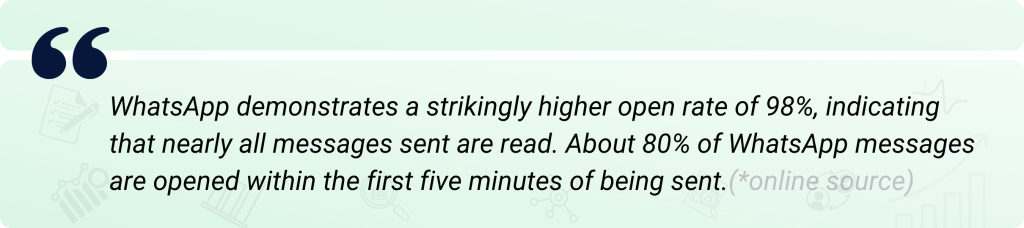
With over 2.7 billion active users worldwide, WhatsApp has emerged as one of the most widely used messaging platforms globally. Its massive user base and high engagement rates make it an ideal channel for businesses to connect with their customers seamlessly.
Compared to phone calls, which can be intrusive and time-consuming, WhatsApp allows for asynchronous communication, enabling customers to respond at their convenience. Unlike emails, which can get buried in cluttered inboxes, WhatsApp messages have higher open rates and faster response times, ensuring timely and efficient communication.
By leveraging WhatsApp’s global reach and popularity, businesses can establish a direct line of communication with their customers, fostering stronger relationships and delivering exceptional customer experiences. Whether it’s for pre-sales inquiries, order confirmations, or post-purchase support, WhatsApp’s versatility makes it an indispensable tool for businesses seeking to enhance customer engagement and satisfaction.
Benefits of WhatsApp Integration for E-commerce
Integrating WhatsApp into an e-commerce business’s customer service strategy offers several key advantages. Firstly, it enables quicker resolution of customer inquiries and issues. With WhatsApp’s instant messaging capabilities, customers can reach out and receive prompt responses, eliminating the frustration of long wait times on traditional channels like email, sms or even phone.
Moreover, WhatsApp facilitates personalized shopping experiences. Agents can share product images, videos, and details directly with customers, guiding them through the selection process and providing tailored recommendations.
This level of personalization not only enhances customer satisfaction but also increases the likelihood of successful sales and repeat business.
Another significant benefit is ensuring consistent customer service across channels. By integrating WhatsApp into an omnichannel contact center solution, businesses can maintain a seamless experience for customers, regardless of the communication channel they choose. Agents have access to a unified view of customer interactions, enabling them to pick up conversations seamlessly and provide cohesive support.
WhatsApp Features Enhancing Post-Sales Service
Firstly, real-time communication and updates are crucial for providing seamless post-purchase experiences. With WhatsApp, businesses can instantly notify customers about order confirmations, shipping updates, and delivery statuses.
This level of real-time communication fosters transparency and builds trust, ensuring customers feel informed and valued throughout the entire process.
Additionally, the ability to share multimedia content, such as images, videos, and documents, allows for dynamic and engaging interactions. Customers can easily share photos of products they’ve received, enabling businesses to promptly address any concerns or provide guidance.
Conversely, businesses can share instructional videos, product demonstrations, or visual aids, enhancing the overall customer experience.
Optimizing Customer Interaction with Omnichannel Solutions
One of the key advantages of an omnichannel approach is the ability to centralize communication channels for agents. By integrating WhatsApp with other channels like email, live chat, and social media, agents can access a unified inbox, eliminating the need to switch between multiple interfaces. This streamlined workflow enhances efficiency, reduces response times, and ensures no customer inquiry falls through the cracks.
Moreover, an omnichannel solution provides data-driven insights from customer interactions across all channels. By analyzing this data, businesses can gain valuable insights into customer preferences, pain points, and behavior patterns. These insights can then be leveraged to improve products, services, and overall customer experiences, fostering long-lasting relationships and loyalty.
Consistent branding and service quality across channels are also essential components of an effective omnichannel strategy. With WhatsApp integrated into the mix, businesses can maintain a cohesive brand identity and deliver a unified experience, regardless of the channel used.
Furthermore, omnichannel solutions often offer advanced features like “sticky” conversations, which allow customers to seamlessly switch between channels without losing context or having to repeat information.
Automation with WhatsApp enables 24/7 Customer Service
The integration of AI and automation capabilities within WhatsApp customer service is revolutionizing the way businesses interact with their customers. By leveraging chatbots and automated responses, companies can provide immediate assistance, addressing common inquiries and concerns without the need for human intervention. This not only enhances the customer experience by delivering prompt resolutions but also optimizes resource allocation, allowing human agents to focus on more complex issues.
Businesses can also leverage AI-driven workflows to automate various tasks, such as order confirmations, shipping notifications, and feedback requests.
Case Study: Leading Automotive Brand Transforms Customer Service
A leading automotive brand was facing challenges in managing post-sales service appointments and inquiries, resulting in long wait times and customer dissatisfaction. To address this, they implemented an omnichannel solution with WhatsApp integration and automation capabilities.
By leveraging WhatsApp chatbots and automated responses, the brand was able to streamline the appointment scheduling process and provide real-time updates to customers. This not only reduced the time spent on post-service bookings and appointments by a staggering 90% but also significantly improved customer satisfaction scores.
Furthermore, the brand’s service centers witnessed a remarkable 53.89% reduction in appointment delays and mis scheduling issues. Customers could now easily schedule, reschedule, or cancel appointments through the convenient WhatsApp channel, leading to a more seamless and personalized experience.
The integration of WhatsApp with the brand’s e-commerce systems enabled automated order updates, tracking information, and personalized recommendations, resulting in increased sales and customer loyalty. By embracing omnichannel solutions and WhatsApp automation, the automotive brand successfully optimized its post-sales service, reduced support costs, and delivered a superior customer experience.
Start Leveraging WhatsApp for Superior Service
In today’s hyper-connected world, customers expect seamless and personalized service across all touchpoints. WhatsApp presents a golden opportunity for businesses to elevate their customer experience and gain a competitive edge.
Embracing WhatsApp allows you to meet customers on their preferred communication channel, fostering a sense of convenience and familiarity. With its intuitive interface and real-time messaging capabilities, your customers can effortlessly reach out to your business, reducing friction and enhancing overall satisfaction.
Moreover, WhatsApp’s rich multimedia support enables dynamic interactions, facilitating seamless sharing of product images, videos, and other relevant information, ultimately leading to more informed purchase decisions and better post-sales support.
By centralizing your communication channels through an omnichannel solution, your agents can efficiently manage WhatsApp inquiries alongside other channels, ensuring consistent and personalized service across all touchpoints. This streamlined approach not only improves operational efficiency but also reinforces your brand’s identity and commitment to exceptional customer service.
Don’t let your competitors gain an advantage by neglecting this powerful communication channel. Take action today and integrate WhatsApp into your omnichannel strategy. Partner with a reputable omnichannel solution provider that offers seamless WhatsApp integration, empowering your business to deliver superior service and forge lasting customer relationships.
In today’s banking and finance landscape delivering top-notch customer service is no longer a luxury. It’s a component, of survival and advancement.
As the industry faces competition from fintech players and evolving customer demands traditional financial institutions are under pressure to enhance the overall client experience. Despite this urgency, many standing firms still grapple with outdated systems that hinder communication across various channels.
The implications are substantial. Studies indicate that subpar customer service leads to losses exceeding $75 billion annually with dissatisfied customers deterring approximately 15 others from engaging with a business.
Conversely, exceptional service translates to increased revenue and enhanced customer loyalty. In the realm of banking and finance quality service directly impacts customer acquisition, retention rates and overall trust.
To address these hurdles head-on industry leaders are increasingly turning towards customer engagement platforms driven by AI and machine learning technologies. When implemented thoughtfully these solutions facilitate responses, interactions across multiple channels personalized experiences tailored to individual preferences and ongoing refinements, for optimal performance.
However, merely adopting tech tools is insufficient. Companies must also adopt an approach centered on prioritizing customer needs at every touchpoint and interaction.
This article delves into the steps banks and financial institutions can take to enhance client communication in today’s demanding landscape. By implementing the strategy and platform they can provide services on a larger scale while improving efficiency and managing costs effectively.
To achieve this, leaders need to challenge outdated practices and prioritize customer approaches. Those financial institutions that embrace change will emerge as the frontrunners of tomorrow while those reluctant to adapt risk being left behind. The decision is crystal clear.
Obstacles, in Ensuring Exceptional Service
The task of delivering top-notch customer service has become increasingly complex for banks and financial entities. Modern customers expect seamless service round the clock and swift issue resolution. However outdated systems hinder agents from accessing customer profiles and transaction histories leading to disjointed experiences and dissatisfied clientele.
Key challenges confront banks and finance institutes:
Rising Customer Expectations
Customers demand tailored services across platforms expecting agents to recognize them individually and cater to their needs. Yet many banks struggle with dispersed data, across systems hindering a view of each customer.
Shifting Demographics
Millennials and Gen Z customers favor self-service options. Banks are being encouraged to provide customer service through channels such, as chat, social media, WhatsApp and SMS based on customer preferences.
Yet many banks have not fully embraced omnichannel interactions. Comprehensive omnichannel contact centre platforms may do a trick here, book a free demo now!
Challenges with Handling Volume
When call volumes peak customers get frustrated waiting on hold for periods. However, just hiring staff is not always a solution due to cost and inefficiency. Banks require systems of understanding customer needs and automating repetitive tasks. Tailored chatbot workflows can save phone bankers significant time, freeing them up for more productive activities.
Data Fragmentation
Customer information is often scattered across systems for banking services, loans, credit cards, etc. This fragmentation makes it hard for agents to grasp a picture of the customer relationship without switching between systems.
To a certain extent, having all the key and important client information readily available is crucial during live customer calls. To consistently provide notch personalized service banks need to reconsider their approach to engaging with customers and the technology they use.
Challenges Posed by Outdated Systems
Banks and financial institutions still rely on outdated legacy systems that are rigid and obsolete in today’s digital world;
Rigidity
Legacy systems typically run on traditional on-premises software that is not easily adaptable or integrable, with new communication channels and touchpoints. These systems were primarily designed for call centre operations.
Lack the flexibility needed for modern omnichannel support. The transition of a conventional platform is difficult, and advanced contact center solution needs of the time; advancement is not the only factor, ‘ready-to-use modules’ will be a differentiator in today’s time.
No Unified Conversation
Legacy systems do not support omnichannel operations, which hinders the ability to connect insights, from channels for a customer experience. Agents may struggle with understanding the context of conversation when interacting on platforms such as the web, mobile, chat and email, hence 360’s customer profile will help to drive conversation easily and quickly.
Let AI work its magic
Yet another constraint is the reliance on manual efforts for improved quality and service. In today’s time, it is not advisable to invest time in listening to recordings and providing training to your agents. These tasks can be automated, allowing them to be completed even without being physically present at the workplace.
As a result of these shortcomings legacy systems fall short of meeting the expectations of consumers who seek personalized service across multiple touchpoints. This ultimately impacts customer satisfaction levels.
Advantages of AI-Powered Platforms
AI-driven customer service platforms offer advantages compared to legacy systems in enhancing communication and comprehension, with clients. Here are some key benefits;
Voice and Text Analysis
Artificial intelligence can analyze both voice and text interactions either in time or, after a call. This analysis can reveal insights such as customer emotions, potential compliance issues, transcripts agent adherence to scripts and more. It uncovers data that can be used to enhance efficiency.
Chat Assistance
Smart chatbots are designed to handle common customer queries without the need for intervention. They offer round-the-clock availability and through learning using machine algorithms they improve their ability to understand questions and provide responses over time. Chatbots play a role in reducing customer wait times. Freeing up agents to focus on complex problems.
Understanding Customer Behavior
By processing amounts of customer data AI models can detect trends identify patterns and extract insights. This deep understanding of customer behavior helps in recognizing their needs pinpointing areas of friction in interactions and uncovering opportunities for enhancements.
Empowering Client Communication
AI-powered platforms elevate client communication by offering omnichannel support, and advanced analytics capabilities as automation features. This results in interactions, with customers that are efficient scalable and tailored to individual needs.
A global bank successfully enhanced client satisfaction through an AI-driven communication platform as part of its transformation efforts. They aimed to provide more convenient customer service to improve the client experience.
Despite facing challenges, in handling a volume of customer inquiries efficiently at their call centers they sought ways to overcome this issue. Long wait times frustrated clients and overwhelmed agents were issues they encountered.
To enhance self-service options the bank integrated an AI-powered platform with features such as blended calling and intelligent IVRs along with functionalities like SMS and voice broadcasting.
The outcomes were remarkable;
Achieved 100% system uptime
Improved loan debt collection by 82.31%
Boosted agent productivity by 79.26%
This case study highlights how one organization revamped its customer engagement and interaction significantly. There are success stories, in our portfolio that showcase the performance and high customer satisfaction achieved through DialShree – AI-Driven advanced platform.
The banking industry is undergoing a digital transformation, omnichannel is no more a luxury, it’s a need now, as we are delving into the most evolving technological era, technology is the fastest field that’s evolving – Thanks to AI.
Customers always loved to pamper, not only with offers but also with great personalized communication, why are we saying that?
Banking consumers have become smarter than ever,
Customer experience isn’t just limited to have conversation or getting information about their transactions or accounts, it has evolved to much crunched interactions between phone bankers and customers, let’s understand how?
Every interaction is an opportunity for the bank and so for agents – Yes, we all know that!
But real-time agent assistance may help your customer facing team on front foot! And the real time guidance tool may turn every interaction into potential business opportunities.
What is Live Agent Assistance and it can be super helpful with Contact Center as a Service(CCaaS)?
This integrated module by Elision may turn your normal contact center into game changing AI driven platform with assured quality during live call and post call. Let’s discuss its major features,
Ensuring compliance with on-the-spot guidance.
Optimizing conversations through scripted support.
Early detection of potential service issues.
Quick-reference tools for handling complex interactions.
Access to accurate, AI-curated information.
Instant insights driven by customer data.
Dynamic recommendations for communication scripts.
Real-time transcription to overcome language barriers.
360’ Customer Journey mapping to AI driven curated conversation could be a perfect combo which may lift the conversation bar by 10x. Let’s understand how it works.
Experience heightened banking service efficiency and precision with Real-Time Agent Assistance.
From the moment a client engages with a banking agent, a synchronized process is initiated.
The conversation embarks on its journey, initially through an advanced automatic speech recognition system, transforming spoken words into text with remarkable speed, setting the stage for the subsequent phase.
In the interim stage, a thorough analysis of the spoken and transcribed word occurs, where the speech and text are analyzed based on various factors. As the evaluation unfolds, the spoken elements concurrently integrate with the system’s understanding, paving the way for the next pivotal step.
Subsequently, as the words transition into actionable insights, they undergo scrutiny by a sophisticated Gen AI engine, where Agent Assist’s innovative tools dissect and interpret the information platform provides insights and information in almost no time. Whether it’s for immediate guidance or strategic support via battle cards.
Ultimately, with these curated insights at their disposal, banking professionals are empowered with their efficiency, deepening customer trust and amplifying both client and agent fulfillment.
Yes, this entire process happens in fraction of seconds during live call.
Enhancing Customer Service with Real-Time Agent Assistance: A Game Changer for Banking & Finance Institutes,
In the fast-paced world of banking and financial services, providing top-notch customer service is paramount. The introduction of AI-driven real-time agent assistance systems, like Elision, has revolutionized how customer interactions are managed, elevating both the efficiency and quality of service provided.
Let’s delve into the key features of such systems and how they’re transforming customer service in the BFSI sector.
Immediate Guidance and Action Recommendations
At the core of AI-driven agent assistance is the capability to offer real-time guidance and recommend the next best actions during live customer interactions. This means that, as a conversation unfolds, the system can analyze the context and advise agents on the most effective course of action, even before the call concludes.
Integration with CRM systems further streamlines workflows by updating databases in real-time, significantly cutting down on post-call tasks.
Script-Guided Conversations
Maintaining a structured and effective conversation flow is crucial. Real-time agent assistance systems provide agents with guided scripts that keep them on track, ensuring important details are addressed and enhancing the overall call quality by reminding the customer facing team of missed critical points.
Proactive Alerts for Enhanced Interactions
Intelligent systems proactively alert phone bankers about potential missteps, such as talking over the customer or dominating the conversation. They offer real-time advice on handling various scenarios, especially when dealing with frustrated customers, ensuring a more respectful and understanding service is provided.
Contextual Support with Dynamic Battlecards
Dynamic battlecards offer real-time, context-sensitive support, triggered by specific customer phrases or concerns, helping agents navigate complex situations with ease. These cards are invaluable, especially for new agents, ensuring they’re prepared to handle calls confidently and effectively.
Comprehensive Knowledge Base
A readily accessible knowledge base, integrated with advanced generative AI, empowers agents to quickly find accurate and detailed answers to customer queries. This resource is essential for providing factual and timely information, directly impacting customer satisfaction positively.
Real-Time Transcripts and Live Captions
To overcome language barriers and ensure clear communication, real-time agent assistance systems offer live captions and complete transcripts of conversations. This feature is especially beneficial in managing calls with customers speaking in mixed languages (like Hinglish), facilitating better understanding and resolution of issues.
Streamlined Queries with ASK AI
The ‘ASK AI’ function harnesses generative AI to provide agents with immediate answers to an array of questions, saving significant time and enhancing efficiency. This feature allows for quick retrieval of information, crucial for fast-paced service environments.
BFSI decision-makers keen on driving their customer service standards and operational efficiencies forward should consider the strategic implementation of real-time agent assistance systems. These systems not only empower agents to provide exceptional service but also enhance customer trust and satisfaction, ultimately contributing to the organization’s success.
Real-time agent assistance systems can be a powerful tool for collections agencies,
This can prove pivotal in reducing Non-Performing Assets (NPA) by succeeding in critical moments. Additionally, it creates opportunities for upselling and cross-selling with real-time battle cards and on-point suggestions.
Let’s discuss how financial institutions can leverage this futuristic AI module to achieve their most significant KPI, which is increased collections:
Improved Negotiation with debtors
Collection agencies can benefit from real-time guidance during sensitive conversations with debtors. AI-driven suggestions provide agents with the best negotiation tactics and payment options tailored to the customer’s profile, ensuring a higher probability of securing a payment agreement. This is directly connected with higher ratio of PTP (Promise to Pay)
Enhanced Script Compliance and Risk Management
In the highly regulated collections industry, adhering to compliance standards is crucial. Real-time agent assistance can alert agents to potential compliance violations during a call, which helps avoid costly legal risks and maintain a professional standard of service.
Identification of Cross-Selling and Upselling Opportunities
While the primary goal of a collection agency may not be sales, there are instances where an agent can identify opportunities to offer additional services that could benefit the customer. For instance, when a customer has settled a debt, the agent may suggest other financial services or products that the parent company offers. There are certain chances where customers switch over for their further finance needs, this may help in customer retention as well.
Personalized Customer Experience
By understanding customer history and preferences through integration with CRM systems, agents can personalize the collections process. This establishes a more trusting relationship and opens up a line of communication where customers might be more receptive to additional offers.
Streamlined Follow-Up Process
The knowledge base and AI-driven prompts can provide agents with automated reminders or steps for follow-ups, ensuring that no opportunity for payment arrangements or related financial services is missed.
Dynamic Scripting for Retention
Agent assistance systems can provide dynamic scripting, which adjusts based on customer responses. This enables agents to handle objections more tactfully and can pivot to retaining the customer’s business or even offering other products when appropriate.
Data into actionable insights and feedback
With speech analytics and real-time feedback, agents can continuously improve their communication strategies, become more persuasive, and effectively handle calls, which is crucial for off line training of customer facing team as well as to achieve other contact center KPIs.
By integrating real-time agent assist features, collections agencies can ensure more effective collections calls, maintain compliance, and even identify additional revenue generation opportunities through cross-selling and upselling where suitable. Decision-makers in the BFSI sector should contemplate incorporating such technologies to maximize their collection efforts while also fostering additional business growth.
Conclusion:
AI going to be main stay, it’s just a tip of how Generative AI and integrated Conversation Analysis. From banking to collection agencies, their main stop is Omnichannel contact center platform integrated with AI driven Conversation analysis platform. It’s not their need of time but certainly their end customers’ need!
Contact centers play a role in today’s business landscape serving as the primary customer service platform for companies across various industries. With the growth of online shopping and rising customer demands contact centers have become essential for fostering connections and driving business expansion.
A contact center integrates individuals, procedures and technology to handle both outgoing customer communications. Agents engage with customers through phone calls emails, live chats, social media platforms and other channels to help, address concerns, process orders and more. Efficient contact centers enable businesses to provide service resolve issues promptly promote products and gather valuable customer feedback.
As the frontline of the customer experience journey contact centers significantly influence satisfaction levels, brand loyalty and overall reputation. Their operational effectiveness directly impacts a company’s performance. Therefore optimizing contact center functions stands as an objective for organizations today.
This guide presents strategies and recommendations for enhancing contact center productivity and improving the agent experience. Enhancing performance entails focusing on personnel management practices alongside processes and technological advancements.
Today, we will delve into recruiting talent implementing training programs and coaching sessions devising motivation tactics, for staff engagement while exploring cutting-edge tools among other essential touch points.
With this strategy, contact centers can enhance business growth by delivering customer experiences.
Assessing Efficiency
Efficiency is a parameter to monitor in contact centers. Some typical methods, for evaluating efficiency include;
Call Handling Time:
This measures the duration an agent devotes to managing a call or chat. A shorter handle time generally signifies efficiency provided that it doesn’t compromise quality. Most contact centers set a target handle time.
Adherence:
This gauges how agents adhere to their schedules. A high adherence percentage indicates that agents are handling the expected number of calls or chats during their shifts. Low adherence may indicate issues with schedules, staffing or agent motivation. Floor managers may need to conduct trial campaigns, for agent groups based on the process.
Utilization Rate:
This metric examines the proportion of logged in time that agents spend actively engaged in calls or chats. A high utilization rate suggests that agents are utilizing most of their time productively than being idle. An 80-90% utilization rate is a goal. Your platform should feature effective pause code reporting to monitor this rate.
Service level:
Service level measures the percentage of interactions that are answered within a specified time frame, such, as 30 seconds for phone calls or 20 seconds for chats. A high service level indicates that customers do not have to wait to connect with an agent. In line with behavior customers prefer not to wait than 20 seconds for a live agents response.
Average speed of answer:
This metric, closely linked to service level calculates the time customers spend waiting before their call is picked up or chat begins. A lower average speed of answer suggests increased efficiency in meeting customer needs.
First call resolution:
This is a KPI in the customer service sector measuring the percentage of customer problems resolved during the interaction without needing a follow up call or transfer. It also reflects efficiency in resolving issues
Agent Experience Factors
The experience of agents plays a role in contact center productivity. Motivated, engaged and satisfied agents tend to perform and deliver customer service. Here are some strategies to enhance agent experience;
Motivation:
Agents should be. Feel a sense of purpose in their work. Offer incentives such as rewards, recognition and opportunities, for career advancement. Acknowledge. Provide feedback on a regular basis.
Our system, for ranking assisted an well-known company in fostering competition among their representatives resulting in an increase in customer experience levels.
Employee Engagement:
Involved representatives demonstrate an interest in their work and the organization. Encourage engagement by showing appreciation to agents granting them independence and involving them in decision making processes. Foster. Open communication within the team.
Job Satisfaction:
Job contentment arises from finding fulfillment in ones work. Cultivate satisfaction by minimizing stress offering flexibility and maintaining workloads. Cultivate an atmosphere. Ensure that agents have the necessary tools for their roles; effective feedback mechanisms and appropriate call routing methods not only save time but also enhance satisfaction levels.
Wellness:
Promote physical well being through wellness initiatives ergonomic work environments and breaks. A healthy workforce is more engaged, efficient and less susceptible to burnout.
Balance Between Work and Personal Life:
Recognize boundaries between work life and personal life by avoiding overtime hours and allowing schedules when feasible. Acknowledge that agents have commitments beyond the workplace.
By concentrating on enhancing the agent experience through motivation satisfaction levels contact centers can achieve increased productivity rates, higher staff retention rates well as improved customer satisfaction levels.
Selecting the Right Personnel:
Choosing agents is essential, for enhancing contact center efficiency and agent experience.
Personality assessments and skill evaluations are steps, in the hiring process to guarantee that agents are a fit for the job.
Personality Assessments
These tests help evaluate whether an applicants natural characteristics and inclinations align with the requirements of a contact center position. For instance individuals who are outgoing, patient and empathetic tend to excel in customer service roles. There are validated personality assessments to gauge traits such as extraversion, emotional stability, agreeableness, conscientiousness and openness. These tests offer insights into how candidates will handle the challenges of the job.
Skill Evaluation
In addition to personality traits it is important for contact centers to assess candidates’ skills during recruitment. Essential skills include communication abilities, active listening skills, problem solving capabilities, technical expertise and stress management proficiency. Skills can be assessed through methods like interviews, tests, writing samples, presentations, role playing customer scenarios among others. Checking references also helps in understanding applicants skill levels. Only candidates showcasing the skills should progress further in the hiring process.
Effective Training on Products/Services:
Proper onboarding and continuous training play a role in equipping agents with the required knowledge and abilities to excel in their positions. An effective training regimen should offer comprehensive onboarding sessions, for hires covering processes within the contact center system usage guidelines, product/service details, soft skills enhancement, and company principles.
During the training period new employees typically undergo an onboarding process that spans over a few weeks and involves a combination of classroom sessions, job shadowing and practical hands on experience.
To ensure that agents are well equipped and continuously improving their skills regular refresher training is offered. These courses cover product knowledge, system updates, skill enhancements and compliance policies to keep agents informed and up, to date.
Additionally, coaching sessions and feedback from managers play a role in enhancing agent performance. Through one one-on-one coaching sessions, managers provide guidance to help agents excel in their roles. Feedback is essential for agents to understand their strengths and areas for development. In today’s evolving work environment leveraging AI technology for performance assessments has become imperative. DialShree’s AI driven voice analysis module has significantly reduced call analysis time by 91.86% while also boosting the First Call Resolution (FCR) ratio.
Equipping contact center agents with the tools can greatly impact their productivity and overall experience. Here are some essential tools to consider:
Bridge between right platforms:
A robust CRM system streamlines access to customer data for agents without requiring customers to repeat information. It offers a view of customer interactions across channels saving time for agents and enhancing customer satisfaction. When selecting a CRM system prioritize features like user interface design, omnichannel support capabilities and seamless integration, with systems.
Knowledge Bases
Knowledge bases play a role, in assisting agents in addressing customer queries without the need for transfers or callbacks. They help reduce the handling time and enhance the likelihood of resolving issues during the call. It is important to select a knowledge base that’s easily searchable and regularly updated. Covers a wide range of topics including products, services, processes and troubleshooting steps. Additionally empowering agents to contribute their knowledge can further enhance the effectiveness of the knowledge base.
Automation
Automation plays a role in streamlining operations by utilizing IVRs, chatbots and AI technology to handle inquiries. This enables human agents to focus on issues that require human intervention. Exploring speech analytics and text analytics can reveal opportunities for automation while ensuring that live agents oversee automated processes to ensure transitions when necessary. While automation boosts efficiency maintaining a touch through interaction remains essential.
Performance Management
Performance management plays a role in enhancing contact center productivity and agent satisfaction. Establishing goals providing coaching and feedback and aligning agent incentives are key components of effective performance management.
Goal Setting as per Nature of the Process:
Define measurable goals that align with contact centre performance indicators such as average handling time first call resolution rate and call waiting times.
Ensure that agents comprehend how their individual goals contribute to contact center objectives.
Collaborate, with agents to establish goals that’re both attainable yet challenging enough to drive motivation.
Coaching and Providing Feedback
Regularly offer guidance to agents through call monitoring observing alongside them and analyzing performance data.
Focus coaching efforts, on enhancing skills and achieving objectives than focusing solely on criticism.
Provide feedback to agents after calls to reinforce actions.
Organize one on one sessions weekly or monthly to discuss performance and areas for growth.
Incentives
Connect agent rewards and acknowledgments to meeting goals and performance standards such as through bonuses or awards.
Foster an incentive culture centered around teamwork than competition.
Maintain transparency regarding incentive qualifications and payouts.
Explore monetary incentives like extra paid time off or preferred scheduling options.
By setting objectives and linking coaching, feedback and incentives to performance outcomes agentsre encouraged to enhance productivity and elevate the customer experience.
Forecasting & Scheduling
Accurate forecasting ensures that the appropriate number of agents is scheduled to handle expected contact volumes at any given moment. Underestimating can lead to long wait times, high abandonment rates and dissatisfied customers.
On the hand overestimating results, in agents and unnecessary payroll expenses. Based on the process utilizing dialing methods could have an impact. Our esteemed clients, in the customer service industry with 40% adoption of this approach have seen an increase in agent efficiency up to 96%. Want to learn more?
Intraday Management
While no forecast is perfect effective real time intraday management is crucial. Keep an eye on performance indicators such as service levels, queue lengths, agent occupancy and customer satisfaction. Stay prepared to make adjustments like call routing modifications bringing in agents offering overtime or redirecting calls to locations as necessary to uphold service levels throughout the day.
Recognition
Introduce a peer-to-peer recognition program that allows agents to acknowledge each other for customer service and teamwork. This initiative helps cultivate a work environment.
Publicly recognizes performers during team meetings or newsletters. Highlight behaviours that you wish to promote.
Empower team leaders to offer informal recognition by appreciating agents who go the extra mile by staying late to assist with projects.
Career Development
Establish career paths and growth opportunities to retain agents. Provide training opportunities and challenging assignments for agents to enhance their skills. Implement training and mentoring programs that support agents in advancing their careers, within the organization.
Surveys
Regularly conduct employee satisfaction surveys for feedback collection.
Demonstrate your attentiveness by putting improvement plans into action based on feedback, from surveys. Inquire about factors that drive engagement such as recognition, opportunities for career advancement relationships with managers and more. Monitor engagement levels over time. Conduct follow-up surveys post-implementation of initiatives to gauge their impact. Remember, aligning goals with team goals is key to achieving success.
Establishing a Favorable Work Environment
A work environment plays a role in enhancing productivity and the overall experience of agents in contact centers. This positivity stems from leadership and permeates across the organization as a whole. Here are some suggestions for fostering a work culture;
Encourage Teamwork
Provide avenues for agents to collaborate and support one another. Consider implementing buddy systems for recruits or engaging them in group projects. Brainstorm solutions collectively as a team to foster a sense of value and involvement among agents.
Cultivate friendships and connections among agents through team building activities fostering camaraderie and mutual support.
Embrace Inclusion & Diversity
Prioritize diversity, in recruitment efforts. Varied backgrounds and perspectives contribute to creativity and problem-solving abilities within the team. Ensure all agents feel welcomed, respected and heard irrespective of gender, race, age or other differentiating factors.
By emphasizing leadership, teamwork, diversity and inclusion practices contact centers can cultivate a work culture that boosts employee satisfaction leading to improved customer experiences—ultimately resulting in heightened productivity levels.
Conclusion:
While platform progress can enhance returns, on investments and reduce the need for involvement customer satisfaction remains paramount as customers often favour interactions for their empathy and emotional value. Combining a touch, with communication platforms can yield remarkable results. With 17 years of expertise, DialShree offers cutting-edge features and AI assistance to fulfil your platform needs. Schedule a demo today!
Security and privacy are two major concerns of businesses and end users. The phone number is one of the most exposed items in today’s digital world. From registering for a simple app like WhatsApp to making purchases online, paying money digitally, looking for directions, or even some other tasks, consumers use their phones and in more than 80% of cases, they need to use their phone number. This exposes their phone number to many sources and often, these consumers fall victim to data breach, stealing, and misuse. Thus, using masked phone numbers has become inevitable.
If we talk about businesses, the legislation has become stiffer towards them. Companies that deal directly with consumers via telecommunication have to follow certain security measures set by the government to keep consumer data protected. Phone number masking can be a great way to do that.
We will cover all aforementioned points in this blog post to give you insight into this really important tool that any business can use to protect the interest of its customers, business, as well as, agents.
What is phone number masking?
Many companies run telemarketing and customer care campaigns, in which it exposes the complete database of client details. On the other hand, utility apps and on-demand services like cab services, food service, etc. usually connect the agent and customer with each other. This exposes the number of both parties. This often causes various issues along with data theft and misuse threats. To prevent this major challenge, phone number masking is used by businesses to add an added layer of security to protect the interest of everyone.
In simple words, phone masking is the process of hiding the real phone number of two parties that are communicating with each other using their own phone devices and numbers. The number displayed on the caller ID of the next person is called a masked or encrypted phone number.
If we look at the technicalities, then it is one of the powerful VOIP solutions that create a communication bridge between an agent and customer who are indulged in a conversation. A third party bridge gets created by the provider and a proxy number is displayed to the caller and callee. This way both parties can have a conversation without disclosing the real phone number to each other.
How does phone number masking work?
The concept of phone masking has been in the industry for many years, but now due to the increasing demand for secure communication and the inclining favor of consumers toward data privacy, this concept has become more popular. There are many companies that offer either a solution or phone numbers that are masked. Your business can choose to use either the number or solution depending on the application and utilities of these numbers.
How does phone number masking work?
You must be curious about the fact that how this whole concept works. Here is a stepwise guide on how it works that is simplified by our experts for you.
There will be a pool of short lived masked phone numbers.
Whenever there is communication needed, one of the numbers from the mentioned pool of numbers will be picked by the system automatically. To use this facility, the customer and agent have to communicate via your application that has this facility of masking the phone numbers of both parties
This number will act as a bridge between the customer and the agent and their calls will be routed and connected with each other via this proxy number. Both can have a conversation as they would have normally
Once the call is completed and disconnected, the proxy number will be removed from the list and discarded.
This means at the end of the conversation neither the agent nor the customer will be able to connect with each other using the same number. If they need to reconnect, they can by using your business app, which will generate another bridge for communication.
Why should a business use masked phone numbers?
There are multiple reasons to use this mechanism and the top 3 reasons to use these numbers are briefly explained hereunder:
A. Data privacy
As we have been emphasizing, the first and foremost reason to use this number is data privacy. It will protect the phone numbers of your clients as well as your agents from any mishaps. Neither a third party hacker nor your own agent or customer can misuse the contact details, which can blot your brand name. All thanks to phone number masking.
B. Protected business model
In India and many other countries, stealing clients is common for cheap benefits. The phone number maskings help in protecting your business and revenue from this kind of issue. As nobody gets the actual phone number, further discussions on making cheap deals are near to impossible. This helps in protecting your business, revenue, and business model.
C. Simplified call tracking
Many businesses need to track calls to ensure the quality of service other than other business advantages. If your agents’ direct numbers are involved, it becomes difficult to record all calls for quality checking. However, with a phone number masking solution, this is easy. You can log all call details, as well as, you can record each call to analyze them later on for quality assurance.
Common utilities of phone number maskings
There are several use cases of phone number masking in today’s digitized and mobile world. Three major utilities are briefly explained hereunder:
1. Call center
One of the major use cases of this concept is in call centers. By masking the numbers of customers and showing a proxy number to agents in the call center solution, call centers can protect the interest of clients. In inbound, outbound, or blended campaigns, the numbers of clients will not be shown to the agents.
2. Cab services
Communication between a cab driver and a customer can be made easier with the proxy numbers. Whether a cab driver is stuck in traffic or if the pinned location needs to be changed by the customer, proxy numbers can help them communicate flawlessly without any hassle.
3. Delivery services
Whether you offer food delivery, couriers, or any other type of delivery service, your team will need to communicate with your customers for directions, availability, etc. The masked numbers will make it easier for them to catch up and deliver things on time.
Wrap up
Phone number masking not only gives security to your customers, but it also gives them the confidence to use your offerings as they find them safe. Moreover, they can leverage several other advantages by keeping their identity anonymous. On the other hand, with this nominal investment, your business can build a secure business brand that only emphasizes quality of service, but also emphasizes quality of experience. You would be one of those top brands that care for their employees and customers.
We, Elision Technologies, offer the best phone number masking for several businesses. There are already several utilities, on-demand, banking, and other businesses that use phone number maskings from our business. Let our team share more details, use cases, and advantages of this concept in regard to your business. So what are you waiting for? Book a demo Now!