Customer experience is key for every business success. Customers today expect instant responses, personalised service, and 24/7 availability. However, traditional call centres have outdated processes, increasing call volumes, and staffing limitations, tends to frustrated customers, overwhelm agents, and miss revenue opportunities, though can not meet these demands. According to Salesforce, 78% of customers expect consistent interactions across departments, but only 50% say it actually happens.
AI in contact centres is more than being a futuristic idea to becoming a core part of running an efficient, modern support operation. Yet, many organizations are still hesitant to embrace it. Avoiding AI has significant consequences, ranging from inefficiency and excessive costs to compliance gaps and reputational harm. Gartner predicts that by 2026, 70% of customer interactions will involve AI-driven solutions. This article will give you the seven major risks associated with avoiding AI in call centres, which can disrupt the growth. We will also discuss best practices and how Elision Technologies can help businesses tackle these challenges.
Why Call Centers Struggle to Keep Up?
Today’s customer expectation fulfilment is a challenge for even the most well-staffed contact centres. Call canters delayed responses and inconsistent service happen due to increasing call volumes, long wait times, and limited resources. Furthermore, they have lack of access to important customer data and compliance restrictions too which make it difficult for businesses to deliver the smooth experience which meets customer expectations.
- Customers resent being put on hold due to High call traffic and extended wait times.
- Manual staffing increases the cost per encounter which is rising operational costs.
- Repetitive duties lower morale and productivity, leading to fatigue and attrition of an agent.
- Without real-time intelligence, client experiences become inconsistent, as interactions vary from one agent to another.
- Regulatory pressure: Strict compliance laws demand accurate call handling and reporting.
- Data overload: Vast amounts of call data go unused due to a lack of analytics tools.
Risks of Avoiding AI in Call Centres
1. Poor customer experience.
Today nobody wants their time for a minute so Customers want instant resolutions and dedicated agent service. Nearly 90% of consumers say an immediate response is important when they have a customer service question (HubSpot). This is main thing call centres facing without Artificial Intelligence:
- Long average handling times (AHT)
- Limited personalisation owing to a lack of customer insights.
- Inconsistent service among agents
- This results in disappointed consumers, unfavourable reviews, and decreased loy
2. Increasing operational costs.
When a business has manual call handling they require high numbers of agents. Without AI automation, more agents are required to manage the same call traffic.
- Overtime and absence drive up expenditures.
- Peaks in call traffic overwhelmed operations.
- As a result, the cost per call increases while profitability decreases.
3. Low agent productivity and high attrition.
Repetitive procedures like FAQs, order monitoring, and appointment confirmations consume agent time. Without AI, agents feel underutilised and disinterested.
- High turnover rates raise recruiting and training costs.
- Skilled agents devote less time to significant, sophisticated requests.
4. Inefficient Call Handling and Reporting
Call centres lack intelligent routing, predictive analytics, and automated reporting due to AI implementation. Call center attrition rates often range between 30–45% annually, largely due to repetitive tasks and stress (ContactBabel). This creates:
- Longer wait lines.
- Poor first-call resolution (FCR).
- Inaccurate decision-making resulting from insufficient reporting
5. Scalability Challenges
When call numbers increase, existing systems suffer. Without AI, call dropouts and long wait times grow. During festive or sales seasons, call volumes can spike by more than 40%, leaving traditional call centers struggling to keep up (CCW Digital).
- Call centers scaling involves costly infrastructure and resources.
- Seasonal demand peaks often disrupt consistency, leading to irregular service and longer wait times for customers.
6. Security and Compliance Risks
Manual methods are more vulnerable to compliance issues and data mismanagement. Risks include violations of Do Not Call (DNC) and Do Not Disturb (DND) lists. In 2023 alone, companies paid over $200 million in fines for TCPA and data privacy violations in contact centers (FTC Report).
- Inaccurate consent management
- Higher chance of data breaches due to human mistake.
7. Brand Reputation Damage
A single negative contact might swiftly lead to social media outrage. More than 60% of customers say they will switch to a competitor after just one or two poor service experiences (Zendesk). This techniques without ai to maintain consistency:
- Customer trust diminishes.
- Negative reviews hurt brand impression.
- Competitors that provide AI-driven help win over disgruntled clients.
Legal and Compliance Risks of Poor AI Adoption
AI can make call centers faster and more efficient, but it’s not without responsibilities. If not implemented carefully, businesses can run into legal and compliance issues, including data privacy violations, improper consent management, biased algorithms, and breaches of telemarketing regulations. Paying attention to these areas is crucial—not just to avoid fines, but also to maintain customer trust and protect the company’s reputation.
- Telemarketing laws (TCPA compliance): AI-generated calls must have proper consent.
- AI disclosure: Some jurisdictions require informing customers that they are interacting with AI.
- Voice data and biometric privacy: Collecting or analysing voice prints must follow consent laws.
- Bias and fairness audits: AI algorithms must be monitored to prevent discrimination
What’s the takeaway? The risk is not in using AI, but in avoiding it—or in applying it without competent advice.
How Elision Technologies Can Help Call Centres Overcome These Risks
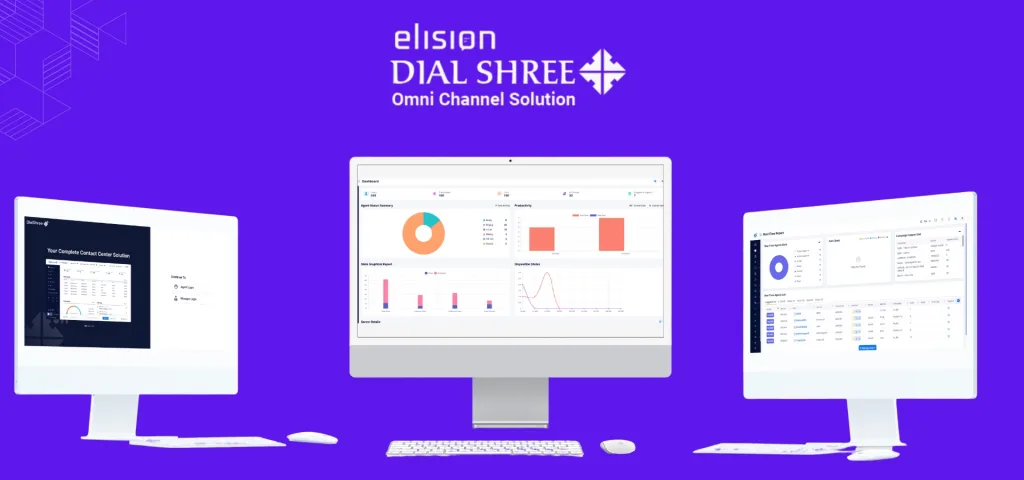
Elision Technologies specialises in AI-powered, compliance-ready call centre systems that prioritise scalability, efficiency, and customer satisfaction. Here’s how we can assist overcome the aforementioned challenges:
1. AI-driven customer experience.
- Intelligent IVR and voicebots: Provide quick replies to reduce wait times.
- AI analytics enables personalised interactions.
- 24/7 availability to support global customers anytime.
2. Cost Optimization Through Automation
- Automate FAQs, reminders, billing, and routine queries.
- Reduce dependency on large agent teams.
- Lower operational costs without compromising service quality.
3. Empowering Agents to Reduce Attrition
- AI handles repetitive tasks, allowing agents to focus on complicated requests.
- Real-time coaching and sentiment analysis enhance performance.
- Happier agents mean better retention.
4. Intelligent Routing & Reporting
- Skill-based routing ensures customers reach the right agent.
- Real-time dashboards & analytics enable accurate decision-making.
- Predictive analytics helps to anticipate customer requirements.
5. Scalable & Resilient Infrastructure
- Cloud-based architecture responds instantly for call volume spikes.
- Disaster recovery and redundancy ensure uptime.
- Cost-effective scalability without heavy hardware investments.
6. Built-in Security & Compliance
- Automated DNC/DND list management.
- Manage call recording with two-party consent compliance.
- Secure storage and management of voice/biometric data.
- Compliance audits conducted at the vendor level.
7. Preserving Brand Reputation
- Consistent and reliable service with AI-powered performance monitoring.
- Smart notifications help to quickly resolve escalations.
- Positive, smooth experiences that convert consumers into promoters.
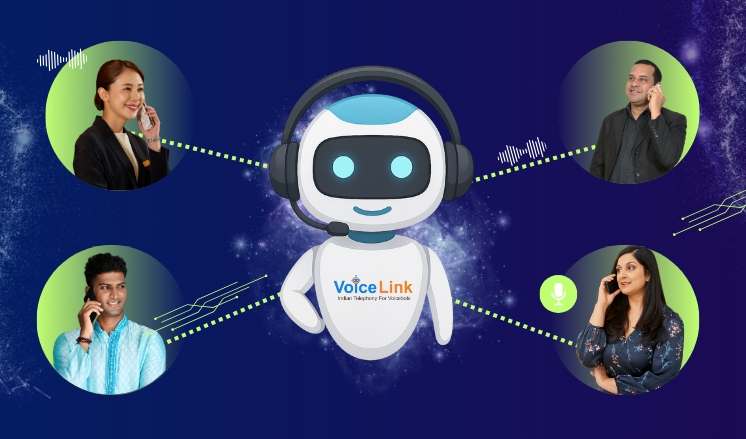
Best Practices for Implementing AI in Call Centers
AI implementation at a contact centre involves more than simply deploying technology into place; it involves carefully incorporating it into your business processes to boost productivity, boost customer happiness, and guarantee compliance. 81% of customers say trust in a brand is a key factor in their buying decisions (Edelman Trust Barometer). Businesses should adhere to these best practices in order to accomplish these goals:
- Start Small and Scale Gradually: Start with basic, repetitive chores like FAQs, billing enquiries, and status updates. This enables teams to evaluate AI performance, acquire insights, and make modifications before moving on to more complicated activities.
- Balance AI with Human Empathy: While AI is great for automation, people are still required for complicated, emotional, and sensitive relationships. Creating a hybrid approach improves efficiency while preserving the personal touch.
- Disclose AI Usage Transparently: Simple disclosures, such as “You are now interacting with an AI assistant; you can request a human agent at any time,” increase trust and engagement.
Agents should be trained to collaborate with AI tools, which includes understanding how to evaluate AI ideas, escalate concerns, and exploit AI insights. Proper training ensures that AI increases productivity rather than causing confusion or resistance. - Train Agents to Collaborate with AI Tools: Agents should understand how to interpret AI suggestions, escalate issues, and leverage AI insights. Proper training ensures AI enhances productivity rather than creating confusion or resistance.
- Regularly Audit for Compliance and Bias: Regular audits of AI workflows assure regulatory compliance and fair, impartial decision-making. Audits can also assist discover opportunities for model improvement.
- Secure Customer Data: AI relies on customer data to perform properly. Encrypting this data, restricting access, and holding vendors accountable are critical for maintaining confidence and compliance.
- Continuously Monitor KPIs and Optimize Models: AI systems perform best when measured against important metrics like average handling time, first call resolution, and customer satisfaction. Continuous monitoring enables adaptations to changing company demands.
Conclusion
Avoiding AI in call centres is no longer an option now, you face some consequences too, including poor customer experience, growing costs, human fatigue, inefficiency, and reputational impact. For call centers it can be more difficult if there AI without compliance.
Elision Technologies provides organisations AI-driven automation and analytics combined with enterprise-grade security and compliance. Our technologies let businesses expand effectively, empower people, cut expenses, and provide client experiences that strengthen.
👉 Ready to future-proof your call center? Talk to Elision Technologies today and unlock the power of AI for smarter, compliant, and customer-first communication.